
Spent 18,000 and still held up by a neighbour’s signature: Supreme Court confirms the limits of the cross-lease ‘veto’
Owning a cross-lease property in New Zealand does not mean owners have complete freedom to decide how to alter it. Extending a house, adding a deck or even simply adding a long-existing sunroom to the title plan may require a neighbour’s signature.
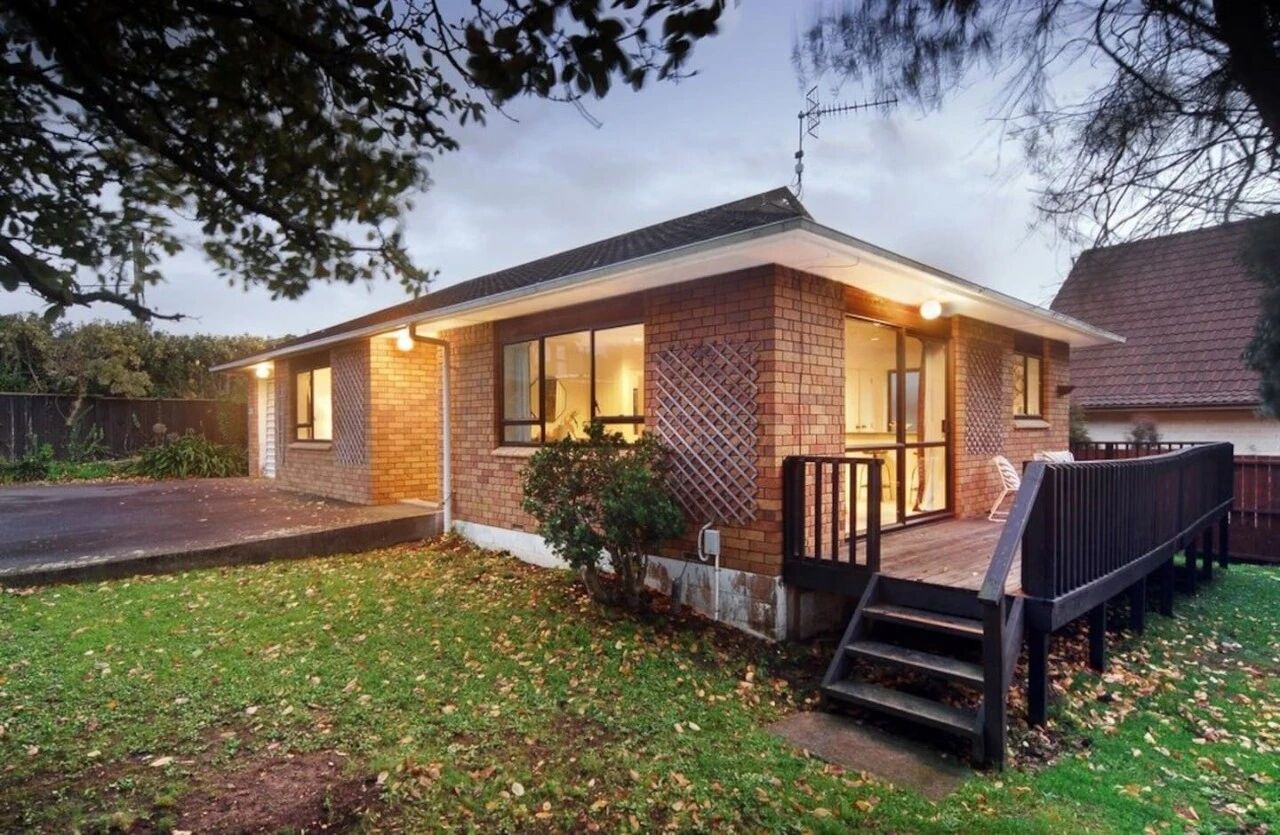
Owning a cross-lease property in New Zealand does not mean owners have complete freedom to decide how to alter it. Extending a house, adding a deck or even simply adding a long-existing sunroom to the title plan may require a neighbour’s signature. If the neighbour refuses, delays or lives overseas long term, an ordinary home alteration can turn into a legal dispute lasting years and costing tens of thousands of New Zealand dollars.
The Supreme Court of New Zealand recently declined to allow the unsuccessful parties in a cross-lease dispute in Remuera, Auckland, to appeal further, confirming that the case should return to arbitration. The decision reinforces that cross-lease owners are entitled to protect their legitimate interests, but that right has limits. Whether refusing a neighbour’s proposed alterations is reasonable must be assessed against the actual effects of the work and both parties’ interests.
Remuera neighbours’ dispute runs for five years
The Supreme Court’s decision on 11 September concerned two homes under the same cross-lease title on Waiatarua Road in Remuera. In 2018, owners Sue Lynn Liow and Sai Hoe Tan removed a smaller uncovered deck, then built a covered deck measuring 24.6 square metres and added another, lower uncovered deck extending towards their neighbours’ home.
According to the High Court’s earlier judgment, they carried out this work without first obtaining consent from their neighbours, Brett Martelli and Susannah Keith. In 2021, Martelli and Keith also proposed alterations, including extending their existing 114.5-square-metre home by about 54 square metres, building a 27.2-square-metre swimming pool and adding 28.8 square metres of decking.
Although all the work was within their exclusive-use area, Liow and Tan refused consent, and the parties subsequently went to arbitration. The arbitrator initially found that the refusal was not unreasonable. That assessment followed the approach taken in an earlier oral ruling by the High Court: refusing consent could be considered unreasonable only where the alterations would bring the applicants a ‘substantial benefit’ while causing only ‘trivial harm’ to their neighbours.
This meant that even very minor effects from alterations could provide grounds for a veto. Examples included construction workers temporarily using a shared driveway, an extension casting some shade on a garage in winter, or even children potentially bouncing a ball on the new deck. The High Court subsequently held that ‘substantial benefit’ and ‘trivial harm’ should no longer serve as the legal test, and referred the case back to the arbitrator for reconsideration. Liow and Tan challenged the High Court’s ruling in the Court of Appeal. In April this year, the Court of Appeal dismissed their appeal. They then sought to take the case to the Supreme Court, but the court declined leave to appeal.
‘I don’t agree’ does not necessarily mean alterations cannot proceed
The Supreme Court acknowledged that, because cross-leases are widespread in New Zealand, the issues raised by the case were of general commercial significance and public importance. However, it found that the grounds advanced by Liow and Tan did not justify a further appeal. The Supreme Court endorsed the Court of Appeal’s approach: whether withholding consent is ‘unreasonable’ must ultimately be determined on the particular facts of each case. The court must consider whether, under the specific cross-lease arrangement and taking all owners’ interests into account, a reasonable party with an interest in the title could have made the same decision to refuse consent.
The Supreme Court did not directly approve Martelli and Keith’s alterations, nor did it order Liow and Tan to sign. The case will return to arbitration, where the arbitrator will reassess whether withholding consent was reasonable under the new test. The court also ordered Liow and Tan to pay Martelli and Keith NZ$4850 in costs. Martelli, who is himself a lawyer, said the decision brought five years of complex appeals to an end, although the matter had begun simply as an application to alter their family home. After spending 18,000, one signature is still missing. While the Remuera case shows how a cross-lease dispute can reach the Supreme Court, another Auckland couple’s experience reflects the powerlessness ordinary homeowners can feel in practice.
When Jarred and Jorja Jaksic bought their first home six years ago, they already knew that a sunroom upstairs had not had the relevant title formalities completed. The sunroom existed before they bought the property, but had not been properly included in the flats plan attached to the cross-lease title. A flats plan is a formal drawing prepared by a surveyor and attached to the title documents, showing the outlines of buildings, exclusive-use areas and common areas. If an extension changes a building’s external dimensions, the plan usually needs to be updated, with consent obtained from the other cross-lease owners and the relevant mortgage lenders, before being submitted to Land Information New Zealand (LINZ) for registration.
The Jaksics now have a one-year-old daughter and want to sell their home and move to an area better suited to raising a child. To reduce potential problems with the sale and buyers’ mortgage applications, they decided to formally add the sunroom to the flats plan. They spent about NZ$18,000 on surveying, plans and legal work. All that remained before they could submit the documents to LINZ was the signature of their neighbour, Haiyan ‘Heidi’ Chen. Yet almost two years later, they still have not obtained it.
Neighbour overseas leaves title update at an impasse
When the Jaksics bought their home, Chen lived in another house on the same piece of land. She left New Zealand during the pandemic and now lives overseas long term, but remains a registered cross-lease owner. In late 2024, the couple contacted Chen to ask her to sign the updated documents. Chen replied that she had been away from New Zealand for more than three years and could not find a lawyer to act for her while she was overseas, so she could not help. The Jaksics’ lawyer said that even while in China, Chen could sign the documents with assistance from a New Zealand lawyer or a Chinese notary, and that the clients were willing to cover her reasonable legal costs.
The matter remained unresolved, and the dispute later shifted to driveway work the Jaksics had carried out several years earlier. The couple said the work had simply widened some areas and improved drainage, without changing the flats plan or the layout of the land. Jarred later consulted a barrister, only to be asked whether he had considered cutting his losses. The barrister estimated that arbitration could cost about another NZ$15,000. Having already spent NZ$18,000, the couple could not afford that additional expense. ‘We’re completely stuck. Because of an owner who doesn’t even live in New Zealand, we can’t move up the property ladder,’ Jarred said.
Chen and her lawyer have made no substantive public response to the matter. Property lawyer John Neverman reviewed the property’s cross-lease documents, which prohibit owners from making structural alterations or extensions without prior written consent from the relevant parties with an interest in the title. They also expressly state: ‘Such consent shall not be unreasonably withheld.’ Neverman considered that the sunroom’s omission from the title plan could constitute a ‘title defect’, but that did not mean every buyer or bank would automatically reject the property. Banks generally make decisions based on the valuation, due diligence and the applicant’s individual circumstances. He also noted that the current system offers no simple way for the Jaksics to bypass their neighbour’s signature, while arbitration is expensive for an ordinary household.
What should you check when buying a cross-lease property?
A cross-lease is not a lease in the ordinary sense. Multiple owners jointly own the entire piece of land, then each occupies a particular home on it under a lease that typically runs for 999 years. Buyers need to consider three separate questions: whether the work has building consent; whether the written consent required from other cross-lease owners has been obtained; and whether the buildings’ actual outlines match the flats plan registered with LINZ.
These are separate matters. Work may comply with the Building Code without the flats plan having been updated; it may also have the neighbours’ consent but lack the necessary building consent. An extension missing from the title plan is therefore not necessarily an ‘illegal structure’, but it may still affect lending, insurance and a future sale. Before signing an unconditional agreement, buyers should have a lawyer check the cross-lease deed and flats plan, and compare each building on site with the registered drawings. If discrepancies are found, they should also establish whose signatures are needed, whether the neighbours are willing to cooperate, and who will pay the surveying, legal and potential arbitration costs.
Commentary and reflections
The Remuera case makes one point clear: cross-lease owners have legitimate interests to protect, but that does not give them an unrestricted veto. Refusing a neighbour’s alterations must have reasonable grounds proportionate to the actual effects. Yet the Jaksics’ experience also shows that having ‘consent must not be unreasonably withheld’ written into a document and obtaining a signature smoothly in practice are entirely different things. When neighbours cannot be contacted, live overseas long term or bring other disagreements into negotiations, owners may have to pay tens of thousands of New Zealand dollars before an arbitrator can decide the matter, even if they believe they are in the right. For ordinary households, the cost of enforcing their rights may itself be enough to force them to give up.
Cross-leases were once a practical way to use land more efficiently and make home ownership more accessible in New Zealand. But as more older homes need extensions and renovation, the weaknesses of this form of ownership, which relies heavily on neighbours’ cooperation, are becoming increasingly apparent. The Supreme Court can redraw the boundaries of the veto, but it cannot obtain that one signature for an owner. Does the current system need a cheaper, faster way to resolve disputes, so that reasonable protection of property rights does not become a tool for prolonged delay? That may be the question these two disputes most deserve to leave New Zealand’s property sector considering.