
Housing flatlines as industrial property gathers pace: listed industrial property company’s profit jumps and dividend rises 5.2%, reflecting new directions in Auckland’s development
As residential market activity steadies, the performance of industrial property is increasingly attracting market attention.
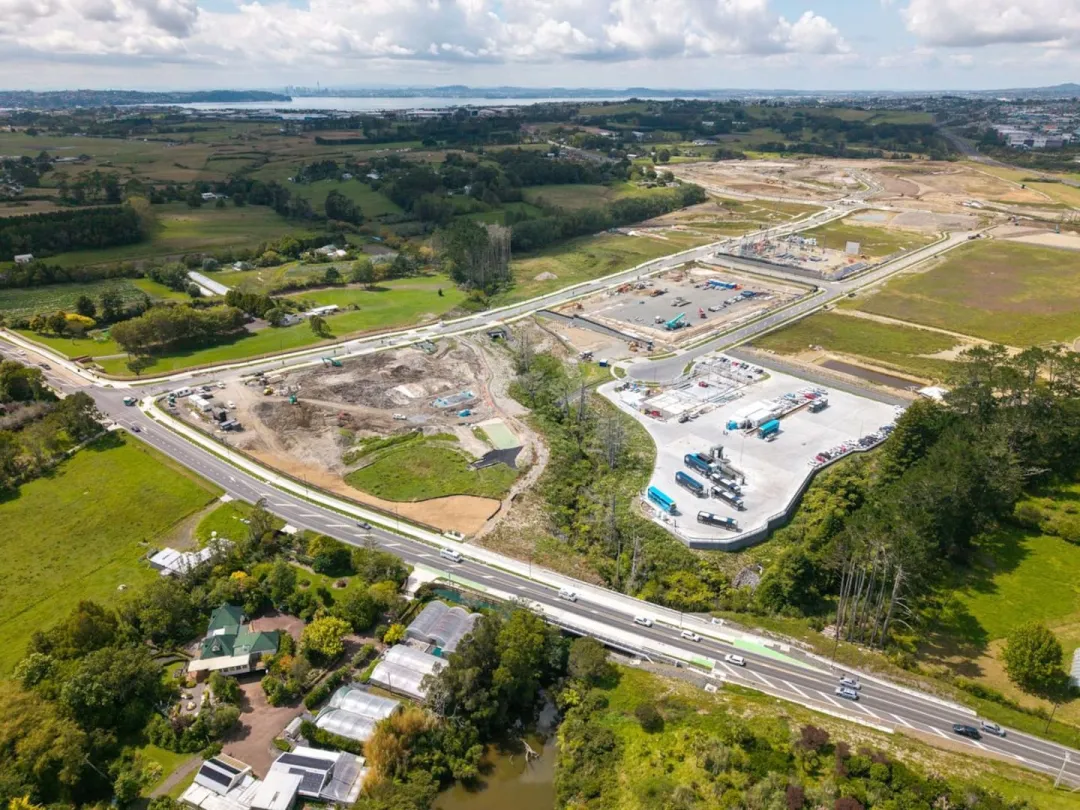
As residential market activity steadies, the performance of industrial property is increasingly attracting market attention.
New Zealand stock exchange-listed industrial property company Property For Industry has announced its results for the half-year ended 31 December 2025. The report shows growth in profit, rental income and asset valuations, while the board has raised its cash dividend guidance for the 2026 financial year.
Half-year net profit after tax rose to NZ$46,900,000, up from NZ$28,700,000 in the corresponding period last year, while revenue increased to NZ$73,600,000. Total investment property value reached NZ$2,250,000,000 at the end of the period.
Property For Industry chief executive Simon Woodhams said the first-half results reflected the resilience of its industrial portfolio and the continuing effectiveness of its long-term strategy. He noted that rental growth, lease renewals and prudent capital management had supported the improvement in earnings.
The structural signals in the financial results
During the reporting period, the company completed 57 rent reviews covering approximately NZ$46,200,000 in contracted rent, with an average rental adjustment of around 8%. Portfolio occupancy was close to full at period-end, with a weighted average lease term of 5.37 years.
19 properties were revalued at period-end, with their overall valuation rising by around 3.2%. Independent market rental assessments indicate that rents for some portfolio assets remain below current market levels, leaving some scope for increases as leases are renewed.
The second stage of the 78 Springs Rd project in East Tāmaki is under construction. Around 60% of the floor area in a dual-unit warehouse of approximately 11,300 square metres has been pre-leased for 12 years. Demolition has been completed at the Harris Rd site following the early termination of its lease, and the company plans to develop approximately 14,500 square metres of new warehouse facilities there.
Whenuapai industrial park opens: a north-west growth corridor takes shape
After the reporting period, the company settled the purchase of 5.8 hectares of industrial land in Whenuapai. The site is within the newly opened Spedding Road industrial park.
The industrial park’s first stage covers 46 hectares and forms part of a development with total investment of around NZ$230,000,000, led by Oyster Capital. The park has officially opened. Although the new road extension connecting State Highway 16 and State Highway 18 is expected to open to the public next month, infrastructure is largely in place.
Oyster Capital director Cameron Wilson said the project would become a new business and employment hub for the north-west. The first stage comprises 38 lots, ranging from around 0.25 to 2.3 hectares, with approximately 80% sold so far. Around 35% of the second-stage lots have also sold, and planning for the third stage is being prepared.
Property For Industry began construction this month on a flexible warehouse development of approximately 10,000 square metres. Other businesses in the park are also beginning construction or operations, including Tranzit’s operational bus depot, CDB Group’s 8000-square-metre warehouse under construction, and Midpoint’s project for Kohler.
The park is close to the rapidly expanding Westgate commercial centre. Oyster previously developed around 1000 homes near Brigham Creek Rd, Tōtara Rd and Dale Rd, alongside parks, playgrounds and neighbourhood retail facilities, indicating coordinated progress in industrial and residential development.
Southern logistics hubs expand: another side of industrial development
Industrial property expansion is not confined to the north-west.
In south Auckland, James Kirkpatrick Group is developing a logistics hub in Māngere worth approximately NZ$1,000,000,000, covering around 65 hectares. Previously used to grow strawberries and lettuces, the site now has several completed warehouse facilities, including L’Oréal Groupe’s distribution centre.
The distribution centre has a floor area of approximately 13,583 square metres, uses renewable energy, water recycling systems and solar installations, and has achieved Green Star certification. Some buildings include hazardous goods storage structures up to 16.8 metres high.
Meanwhile, Goodman Property Trust is progressing a logistics and freight hub on the former Villa Maria vineyard site on Montgomerie Rd. Named Waitomokia, the project proposes approximately 95,000 square metres of warehouse space.
These projects show Auckland’s industrial property footprint expanding simultaneously at its northern and southern ends.
The pace of industrial activity as housing steadies
Across the broader market, fluctuations in residential sales volumes and prices are becoming more moderate. Industrial property development and leasing activity, by comparison, continue to progress steadily.
Market participants say demand for warehouse and industrial space has shown a degree of resilience amid expanding e-commerce, supply chain optimisation and growing demand for regional distribution. Property For Industry also said it was considering a bond issue, with details expected to be announced in early March.
From improvements to existing assets in East Tāmaki and the establishment of a new industrial park in Whenuapai to the construction of large logistics hubs in Māngere, the location of Auckland’s industrial facilities is adjusting to changes in transport and population patterns.
The continued expansion of industrial property reflects both business performance and an evolving phase in the city’s economic structure. Whether this trend can continue will depend on further evidence from the wider economic environment and the pace of business expansion.