
Still unable to move in after 5 years of building, while costs keep climbing: is cost escalation becoming a new black hole of risk in homebuilding?
On a newly developed residential street in Pukekohe, South Auckland, two neighbouring houses remain unfinished despite construction beginning in 2021.
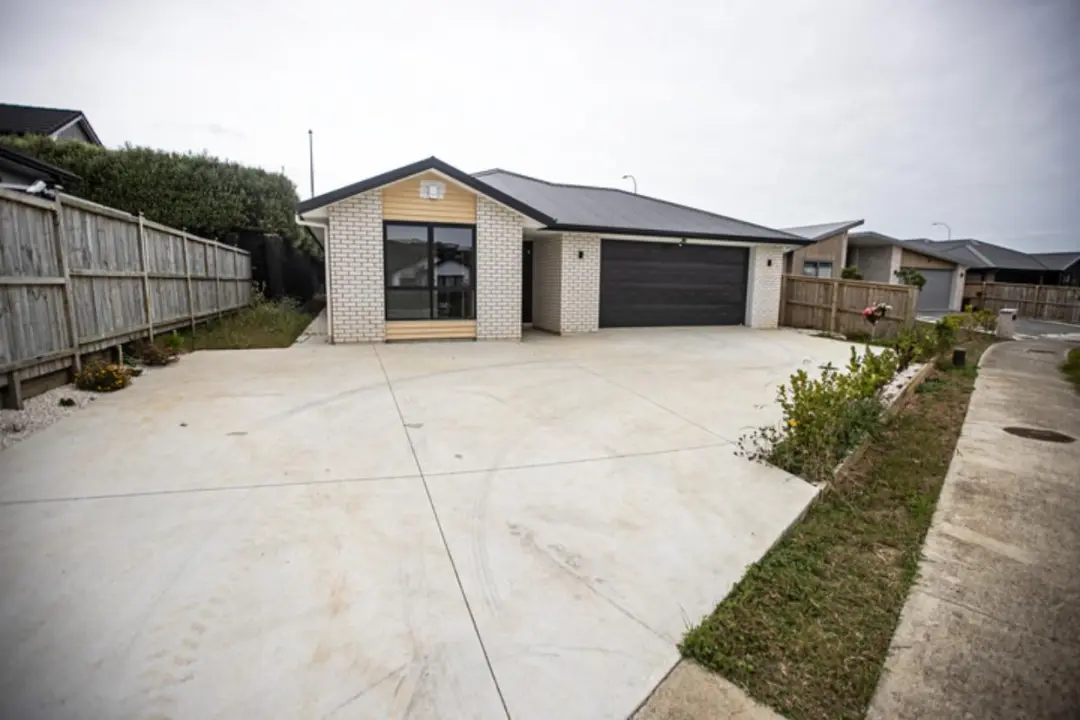
On a newly developed residential street in Pukekohe, South Auckland, two neighbouring houses remain unfinished despite construction beginning in 2021.
Amid disputes over construction delays, additional charges and contract terms, these projects highlight an issue that is becoming increasingly difficult to ignore in today’s homebuilding market.
Mounting costs gradually slip out of control
In 2021, software engineer Anubhav Verma signed a building contract.
It was a typical house and land package, priced at around NZ$1,100,000. He had spent years preparing for it, arranging everything from the deposit to the mortgage step by step.
The initial delays were attributed to the progress of land development, which was not unusual at the time. But even once construction began, there was little improvement.
He later recalled a period when he drove past the site almost daily to check progress: ‘Sometimes nothing had happened.’
As construction dragged on, new charges began to emerge.
The builder sought additional payments, citing rising material prices and supply constraints. These charges had not been clearly set out at the beginning but emerged gradually during construction.
The contract referred to these charges as ‘cost escalation’.
On paper, it was simply a clause. In practice, it became a constantly changing figure. Verma said he struggled to judge which charges were reasonable and which were not.
In 2024, the house reached the stage of installing doors and windows. Verma said he had already paid around NZ$45,000 for the relevant materials.
Soon afterwards, he received an email saying the materials had been stolen overnight. ‘I was already very anxious, and this completely broke me.’ He began checking more details himself, including the house’s insurance.
The response was unexpected. The insurer said the policy for the house had been cancelled back in January that year.
‘I had no idea.’ After lawyers became involved, construction soon stopped. He was never able to contact the builder again.
Another household’s choice
Next door on the same street, Harry Singh and his wife signed a building contract in the same year. They paid a deposit of NZ$100,000 and were told completion would take about a year. But their project also progressed slowly.
Singh said that for a time, he contacted the builder almost every day to ask about progress. Replies were often slow, sometimes taking several days.
‘He said he was waiting for materials, but we just kept waiting.’ As time passed, problems over costs also emerged.
Singh described the additional charges as ‘very sudden’ and substantial. He and his wife eventually decided to stop paying.
After the contract was terminated, a builder they knew took over and completed the house. They estimate the project cost around NZ$200,000 more overall. ‘For those three years, we thought about it every single day,’ they said.
One household chose to keep paying; the other chose to stop.
Yet the paths of the two houses gradually converged. Work was forced to stop, timelines kept stretching out and costs drifted further from the original budgets. Prices and timeframes that had seemed clear when the contracts were signed gradually diverged from reality.
The builder’s account
In an interview, the builder involved, Wade Eatts, said the contracts had always included cost escalation clauses and that the charges were supported by supplier quotes.
In his view, the central issue was that payments had not been made as agreed. He believed the clients had paid only portions of the amounts based on their own interpretations, rather than all the charges due, putting pressure on project funding.
He also said supply problems during the pandemic and subcontractor arrangements had affected construction progress.
On insurance, he said the cover had been adjusted, but the owners said they had not been informed.
As more details emerged, the scope of the problem widened.
Several companies associated with Eatts have entered liquidation in recent years. Some had substantial debts, including unpaid amounts owed to subcontractors. Liquidators said obtaining complete information had proved difficult as they worked through the companies’ finances.
Meanwhile, subcontractors involved in the projects also told the media that some payments for their work remained outstanding.
How a clause changes in practice
In this case, ‘cost escalation’ became the central point of dispute between the parties.
It was originally part of the contract designed to address price fluctuations.
But as the contract was put into practice, the clause’s impact grew over time.
As the project timeline stretched, costs kept changing and disagreements emerged over payments and progress, a line in the contract became something tangible and complex.
Verma’s house is now close to completion, but compliance issues remain and he cannot yet move in. He has hired a new builder to take over.
Singh’s house has been completed, but at a cost far above the original expectation.
Both houses on this street have now come close to being ‘finished’, but the effects of the process are not so easily brought to an end.
Observations and reflections
It is difficult to reduce this case to a simple judgement about ‘who was right and who was wrong’.
The contracts existed, and the clauses were there in writing. But when a charge that amounts to a few lines at signing becomes a constantly changing figure during construction, the question often moves beyond ‘is it reasonable?’ to ‘was it truly understood?’
For builders, rising costs may be a real pressure. For homebuyers, however, a house often represents years of savings, a long-term mortgage and even an expectation of stability in life.
As projects stretch out and costs are reassessed, boundaries that once seemed clear begin to blur. Similar clauses are appearing in more contracts, and similar disputes are recurring across different projects. The real question is how risk is allocated under these rules. When matters finally reach their conclusion, the consequences are often borne by the party least able to walk away.
What do you think?
If you are building or buying a home, or have done so before, have you encountered similar additional charges or uncertainty?