
Only 49.9 days of fuel reserves left? Government confirms relief plan coming soon! How the energy shock reaches New Zealand household budgets
The energy crisis once seemed far removed from New Zealand. But in Auckland, price boards at some petrol stations have already brought it into everyday reality.
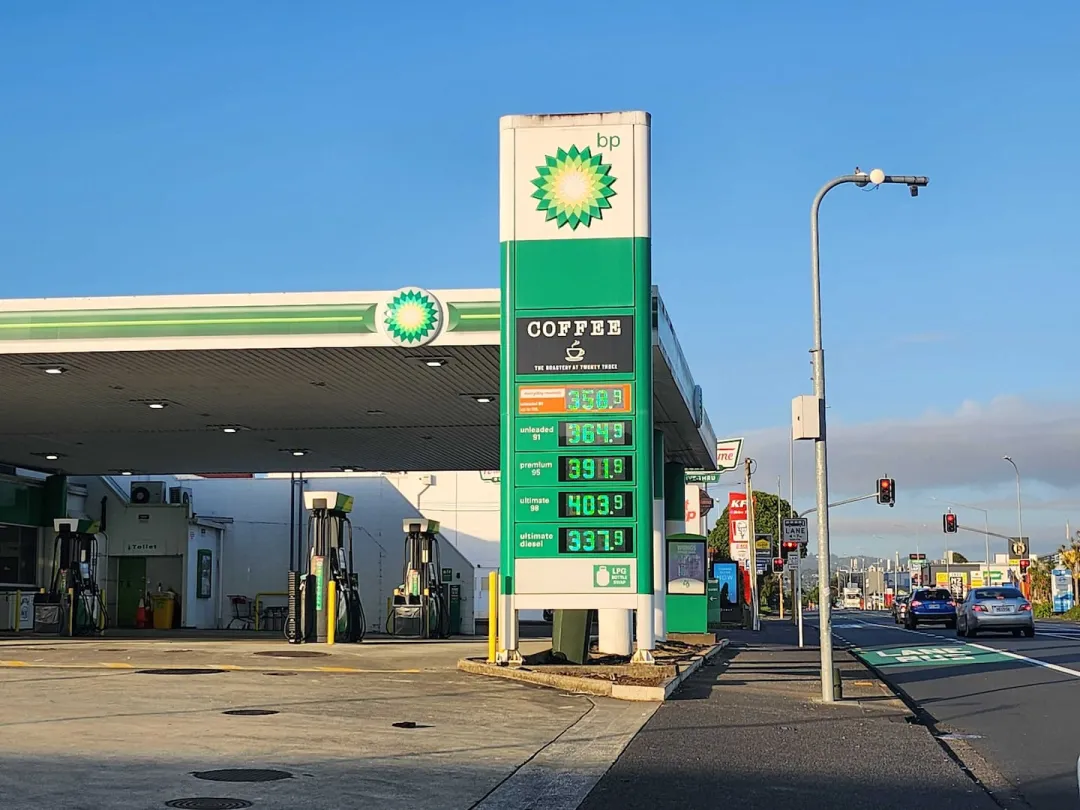
The energy crisis once seemed far removed from New Zealand. But in Auckland, price boards at some petrol stations have already brought it into everyday reality.
Over the past few days, petrol prices in some areas briefly exceeded NZ$4 per litre. At BP in New Lynn, 98-octane petrol reached $4.039, while at Mobil in Favona, both 91- and 98-octane petrol hit $4. Some stations have also briefly run out of fuel, with consumers reporting that stations in Onehunga, New Lynn and Papatoetoe temporarily had ‘no fuel available’.
Just three weeks earlier, the average price of 91-octane petrol was still around $2.49. Changes over little more than ten days have brought the ‘energy crisis’ directly into New Zealanders’ everyday spending.
Against this backdrop, the Government held a post-Cabinet press conference, released the latest fuel stock figures and said targeted relief measures for the fuel crisis would be announced tomorrow.
Government to announce targeted fuel crisis relief tomorrow
The Government has released the latest fuel stock figures and begun updating New Zealanders on supply twice a week:
-
The latest figures, as at 18 March, show that New Zealand’s onshore and offshore petrol reserves cover 49.9 days, diesel reserves 45.5 days, and jet fuel reserves 44.7 days. Combined stocks cover 46.9 days.
-
A further 8 shipments are expected to arrive by 1/4. Of these, 7 are expected between 19/3 and the 25th of that month. These shipments carry 20 days of petrol, 16 days of diesel and 12 days of jet fuel.
-
Another vessel is scheduled to arrive between 26 March and 1 April. However, it carries no petrol, only four days of diesel and ten days of jet fuel.
Releasing the latest figures, the Ministry of Business, Innovation and Employment said New Zealand’s fuel supply remained stable, with healthy stocks onshore and on the way.
At today’s Cabinet meeting (23 March), the Government decided how to help New Zealanders cope with soaring fuel prices, but the specific measures will be announced on Tuesday. The Prime Minister said the Government could not ease rising price pressures for everyone: ‘The impact on households and businesses will vary depending on their circumstances. The first step is to ensure New Zealand has enough fuel.’
Finance Minister Nicola Willis said the financial assistance package to be announced tomorrow would benefit workers, families with children and low-income households.
How the energy shock affects every household
Many New Zealanders already feel that this shock is no longer just news from afar. Rising fuel prices, higher transport costs and increasing mortgage rates are gradually changing spending and decisions. For some homebuyers, plans that once seemed settled are becoming less certain.
The first wave: fuel prices
The first change is being felt in an expense ordinary households can scarcely avoid: fuel.
As tensions involving Iran escalate, international oil prices have climbed rapidly and market concerns about global energy supply chains have intensified. Anxiety has also begun to emerge in New Zealand, with people in some areas rushing to buy fuel containers and stockpile petrol. The Government has even publicly discussed the national four-level fuel response framework, ranging from ‘being prepared’ to ‘strict rationing’ in the most serious circumstances. For many, this immediately recalled the alert system at the start of the pandemic six years ago.
These collective memories are familiar. During the pandemic, people experienced supply chain disruptions, soaring living costs and dramatic swings in house prices. They also saw how overseas shocks could quickly change the pace of the local economy. Now, as terms such as ‘fuel alert’ re-enter public discussion, market unease is naturally spreading rapidly.
The problem is that rising oil prices never mean only that ‘a full tank costs more’.
They also mean that transport, shipping, insurance and agricultural input costs could all rise together. As a country at the end of global supply chains, New Zealand cannot easily avoid this shock. Petrol is becoming more expensive today; in a few weeks, it could be supermarket goods, freight charges, building materials or even the total monthly living expenses of more households.
The second wave: inflation expectations and interest rate markets
When oil prices rise, the first adjustment in financial markets is often in prices rather than sentiment.
Over the past few weeks, New Zealand’s long-term interest rates and swap rates have risen noticeably. Two-year swap rates have rebounded rapidly from their lows at the end of February, suggesting that markets are reassessing the future path of inflation and the central bank’s likely policy direction. Ordinary borrowers may not understand what ‘swap rates’ mean, but they will soon feel a more tangible change: fixed mortgage rates are no longer falling and have instead begun to rise.
Major banks including Westpac, BNZ and ANZ have recently raised some medium- and long-term fixed mortgage rates in succession. With many borrowers having planned to ‘wait for rates to bottom out before fixing for two or three years’, the banks’ moves send a clear signal to the market: the low point in this interest rate cycle may well have passed.
For buyers purchasing out of necessity and households needing to refix their mortgages, the impact is far from abstract.
Over the past year, many borrowers chose floating or short-term fixed rates while waiting for better long-term offers. Now, the new uncertainty introduced by war has suddenly unsettled interest rate expectations that had been stabilising. Homebuyers face more than the question of whether house prices might become a little cheaper: they must also consider whether borrowing costs will rise sooner than expected.
In other words, the war in the Middle East has not directly pushed up New Zealand mortgages, but through oil prices, inflation and financial market expectations, it has begun to put pressure on mortgage costs.
The third wave: buyer sentiment and the pace of the housing market
The housing market is often among the first places to register changing market conditions
In Auckland, some property professionals have already noticed the change. One described last week’s open homes as ‘unprecedentedly quiet’; others said cheaper properties were still attracting viewers, but buyers of expensive homes had clearly pulled back first. A wait-and-see approach is becoming particularly pronounced in the market above NZ$3,000,000.
When external conditions suddenly deteriorate, the first change among homebuyers is often in their appetite for risk rather than their ability to pay. Particularly at the upper end of the market, buyers are in no hurry to commit. They prefer to see how events and interest rates develop, and whether sharemarkets and financial markets will remain volatile. When neither sellers nor buyers are in a hurry, many decisions are naturally deferred.
The picture is more complex in the lower- and middle-priced market. Genuine demand remains, but high fuel prices and commuting costs are reshaping buying preferences. For many Auckland households, already exhausting long commutes now come with higher fuel bills. The logic of ‘buying further out to get a bigger house’ may therefore become less appealing.
In the period ahead, homes closer to work, with better transport connections and lower commuting costs, may attract renewed attention.
The fourth wave: a central bank dilemma
If oil prices, shipping charges and supply chain costs continue to rise, they will almost certainly push up New Zealand’s inflation over the next few quarters. But this inflation would not stem from an overheating domestic economy. It would be a classic externally driven shock.
This puts the Reserve Bank of New Zealand in a difficult position.
Tightening policy to curb inflation could further damage an already fragile economy and housing market. But doing nothing could allow inflation expectations to get out of control. This goes beyond a simple choice of ‘raising rates or not’: it exposes the limitations of policy tools when confronting geopolitical shocks.
Oil prices will not fall because the OCR changes, but interest rates affect the financial burden on every household.
The fifth wave: pressure on the Government’s fiscal headroom
Meanwhile, the Government also faces choices.
Should it intervene to ease fuel cost pressures? If it does, where will the money come from?
As global interest rates rise, the New Zealand Government’s own borrowing costs are also increasing. Any subsidy would further reduce its fiscal headroom. If the shock is short-lived, the problem remains manageable. But if the war continues, the effects will extend beyond oil prices to employment, spending and overall economic confidence.
Observations and reflections
Looking back along this path reveals an unfolding chain reaction: conflict → oil prices → inflation → interest rates → mortgages → housing market → household budgets
As ordinary New Zealand households, we can neither influence international events nor determine the direction of oil prices, yet we must bear almost all the changes in living costs. From filling up and commuting to mortgages and spending, every part of life is being repriced. Perhaps the greater concern is not prices themselves, but changing expectations.
For policymakers, this is also a difficult challenge. Imported inflation, geopolitical shocks and a weak economic recovery are all exerting pressure at once. Can New Zealand still rely on interest rates alone to respond to such complex conditions? Or will greater coordination between policies be needed?
For ordinary households, the questions are more practical: as uncertainty grows, should they keep waiting or make a decision against the prevailing mood? Fix their mortgage rate or wait for a better opportunity? Maintain their current lifestyle or rethink the balance between commuting and where they live?
That leaves a question for every New Zealander living through this: in these conditions, would you choose greater caution or take more initiative? Would you keep waiting or start acting?