
Why is construction always among the first to feel an oil price crisis?
As tensions persist in the Middle East, uncertainty over global energy supplies is growing, and fuel prices have risen sharply in a short period. The ripple effects have already reached New Zealand, with petrol prices, and diesel prices in particular, continuing to climb.
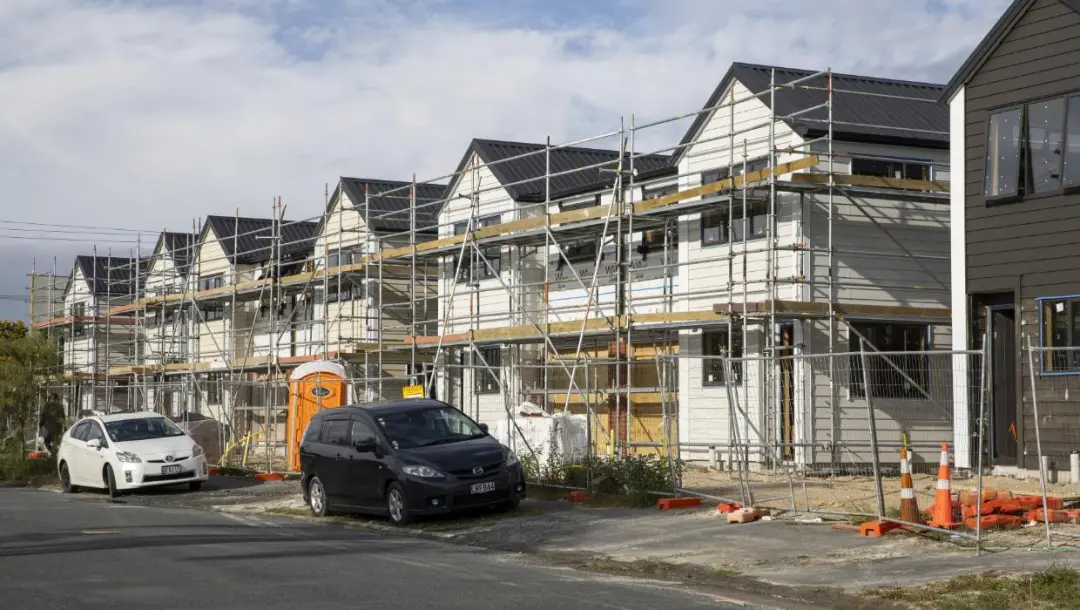
As tensions persist in the Middle East, uncertainty over global energy supplies is growing, and fuel prices have risen sharply in a short period. The ripple effects have already reached New Zealand, with petrol prices, and diesel prices in particular, continuing to climb.
Construction has been among the first sectors to come under pressure in this latest cost shock. Industry participants generally believe this reflects not only the direct impact of higher fuel prices, but also the sector’s heavy reliance on transport, energy and international supply chains.
Dependence on transport and energy puts construction under pressure early
Construction relies heavily on transport. Data shows that around 70% to 80% of New Zealand’s building materials are delivered by road. Rising diesel prices therefore push up transport costs immediately.
Meanwhile, producing many building materials is itself energy-intensive. Products such as cement, steel and bitumen depend heavily on energy during manufacturing, so higher fuel prices further increase material costs.
Beyond local transport and production factors, New Zealand’s reliance on imported building materials is also significant. Industry estimates suggest around 90% of building products or key components come from overseas. Higher international shipping costs, or route changes prompted by geopolitical risks, could affect both supply costs and delivery times.
Cost pressures emerge, testing contractual arrangements
As costs rise, some construction firms have begun issuing early warnings to project stakeholders about potential price adjustments and scheduling risks.
For existing projects, how to share the costs has become a key question. Legal professionals note that whether rising costs can be passed on to clients depends on the contract terms. For example, NZS 3910, a standard construction contract commonly used in New Zealand, generally allows cost adjustments under certain conditions, but their application still depends on the detailed provisions of the contract.
Some firms are also examining whether force majeure clauses could apply to cost changes caused by unforeseen events such as war.
Industry participants say many projects are now being reassessed, with budgets adjusted, construction schedules revised and, in some cases, progress delayed.
Changes in construction costs are feeding through to the property market
Developers widely report that rising fuel and transport costs have begun affecting building material quotes. Some suppliers have already given notice of price increases over the coming months.
Against this backdrop, new projects face increasing cost pressures, and some development plans are being reassessed. Market participants say that if costs keep rising, they could constrain the supply of new homes to some extent.
Meanwhile, higher fuel prices are also affecting household living costs. Increased spending on transport, food and related items could weaken homebuyers’ actual purchasing power.
Economist Shamubeel Eaqub says that if fuel price increases persist for several months, they could further intensify inflationary pressure and weigh on economic growth.
Property economist Kelvin Davidson notes that rising inflation could bring a risk of interest rate increases, raising borrowing costs and putting additional pressure on the property market.
From a broader economic perspective, this round of changes in costs and interest rates also reflects deeper structural issues.
Reserve Bank of New Zealand Chief Economist Paul Conway recently noted that monetary policy can control inflation but cannot directly improve households’ purchasing power. Productivity, competition and the economy’s structural efficiency are what truly determine living standards over the long term.
In other words, interest rates can address short-term shocks to some extent, but struggle to resolve the underlying reasons households are facing a greater financial burden in real terms.
As external uncertainty increases, these existing structural pressures are more readily amplified, gradually feeding through to mortgage costs, rental returns and property investment decisions.
Uncertainty remains the biggest variable
Although the effects are gradually becoming apparent, the market generally considers the duration of the shock to be the key factor determining the extent of its impact.
Infometrics Chief Forecaster Gareth Kiernan says that if supply chain disruption continues, a repeat of earlier building material shortages and sharp cost increases cannot be ruled out.
Analysis suggests that if the conflict is short-lived, cost pressures could gradually ease. But if it becomes prolonged, construction, property and the wider economy could all face more substantial adjustments.
The market adopts a wait-and-see approach
New Zealand’s property market was already relatively weak. Listing levels are high and buyers are strongly inclined to wait, while this external shock has added further uncertainty.
Industry participants generally believe that the combined pressure on costs and confidence may not immediately change the market’s direction, but could slow its recovery.
As these factors interact, construction, at the front end of cost transmission, has already felt the pressure. Subsequent developments in the sector will continue to influence the direction of the property market.
Observations and reflections
Current conditions suggest that construction is always among the first sectors to feel pressure during an oil price crisis because it sits at the front end of the wider economic chain, linking energy, transport, supply chains and the property market, rather than because of problems within the industry itself.
Oil price changes often appear first in construction costs, which then feed through to house prices, rents and market confidence. This transmission is not always rapid, but once it begins, its effects are often lasting and far-reaching.
The real challenge facing the market is not simply rising costs, but the uncertainty created by several factors converging: fuel prices, transport charges, material supplies, interest rate expectations and buyer confidence are all changing at once.
For the industry, this is a short-term shock, but it could also prompt a reassessment of cost structures and the way risks are allocated.
That raises further questions: if this shock lasts longer, how should project costs be shared? Does the pace of development need to change? In this new environment, how should profit margins and the limits of acceptable risk be redefined?