
Positive developments keep coming, yet house prices could fall? New Zealand’s housing market sends conflicting signals
With policy easing, industry activity recovering and costs stabilising, New Zealand’s property market had been expected to see a modest recovery in 2026. However, the latest forecasts suggest house prices could fall this year, with market trends diverging significantly.
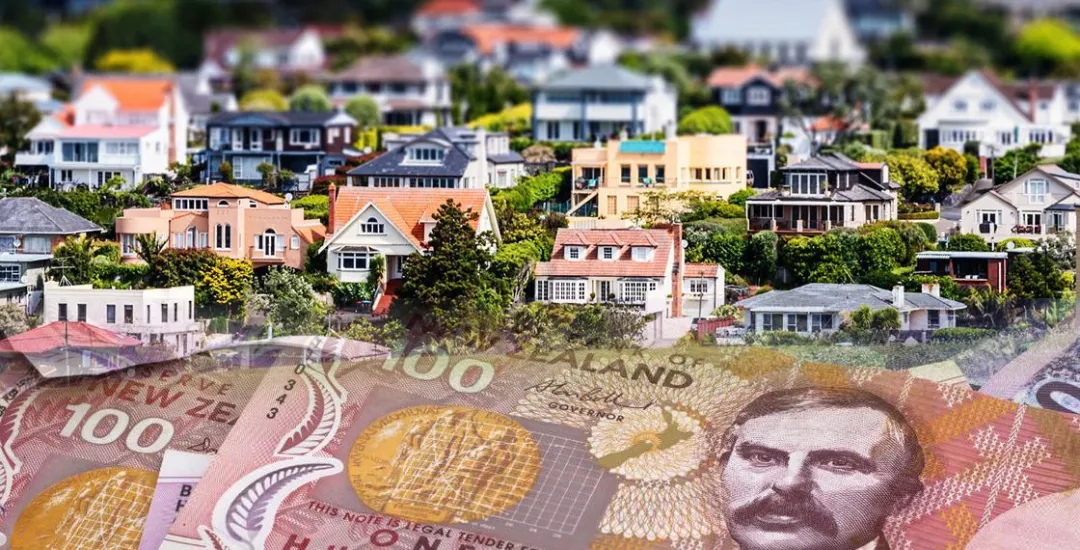
With policy easing, industry activity recovering and costs stabilising, New Zealand’s property market had been expected to see a modest recovery in 2026. However, the latest forecasts suggest house prices could fall this year, with market trends diverging significantly.
Building material rules eased as Government seeks lower costs
The New Zealand Government recently expanded its recognition of overseas building materials further. The latest decision issued by the Ministry of Business, Innovation and Employment (MBIE) allows approximately 38,000 plumbing and drainage products already certified under Australia’s WaterMark scheme to be used directly.
This is the second stage of the initiative, following recognition of an initial group of more than 90,000 products in October 2025. The Government says the policy changes aim to reduce duplicate certification processes, improve construction efficiency and ease building cost pressures by increasing market competition.
Previously, even products widely used overseas had to be individually demonstrated to comply with New Zealand’s Building Code, adding to approval times and project uncertainty.
Construction activity picks up as industry shows signs of recovery
Meanwhile, the construction industry is gradually emerging from its downturn. Data shows residential building consent numbers rose approximately 9% year on year in 2025, with construction activity increasing noticeably in areas such as Christchurch and Queenstown.
However, the industry’s recovery remains uneven. Industry analysis shows the total value of non-residential building consents is still down approximately 4.6% year on year, despite growth in some areas, including office buildings and educational facilities.
Industry participants generally attribute the pickup in construction activity to improving interest rate conditions and a gradual recovery in demand, but say the foundations of the recovery still need strengthening.
Construction costs stabilise but remain high
On costs, the Cordell Construction Cost Index published by Cotality, formerly CoreLogic, shows construction costs rose 0.9% quarter on quarter in the final quarter of 2025, with annual growth of 2.3%.
Although growth is well below the post-pandemic peak of more than 10%, industry participants note that overall construction costs remain high and have yet to fall meaningfully.
Materials account for approximately 50% of costs and labour around 40%, with the remainder covering design, approvals and other expenses. Analysis suggests that, with the labour market still relatively weak, a sharp rise in costs is unlikely in the short term, but there is also limited scope for prices to fall.
External shocks increase uncertainty as house price expectations shift
Together, these positive factors had been seen as creating the conditions for a property market recovery. But recent changes in the external environment are affecting market expectations.
In its latest Property Focus report, ANZ revised its 2026 house price forecast from a small increase to a decline of approximately 2%.
The report notes that the situation in the Middle East has pushed up global oil prices, in turn lifting inflation expectations and wholesale interest rates. Market interest rates have risen even though the Official Cash Rate (OCR) has remained unchanged.
ANZ Senior Economist Matthew Galt says rising mortgage rates and weakening consumer confidence will continue to put pressure on the property market.
‘The property market has essentially moved sideways over the past three years, with little clear momentum. In the current environment, any additional uncertainty could further suppress demand,’ he said.
The bank also notes that, if external tensions ease, the market could return to modest growth around 2027, although downside risks remain in the short term.
Market trends diverge as the recovery path remains unclear
Overall, New Zealand’s property market is in a phase shaped by several interacting factors. On one hand, policy is reducing barriers to supply, industry activity is gradually recovering and cost growth is stabilising. On the other, uncertainty in the external economic environment is affecting demand through interest rates and confidence.
Analysts believe the market has yet to establish a clear direction. In the short term, house price trends will depend more on further developments in the global economy, interest rates, and local employment and incomes.
Observations and reflections
There may be a simpler way to understand the changes in the current market:
Over the past few years, the main property market problem was insufficient supply. Now, demand is becoming more rational and even conservative.
As Reserve Bank of New Zealand Chief Economist Paul Conway has noted, monetary policy can regulate inflation, but cannot directly change households’ real purchasing power or long-term confidence.
When uncertainty in the external environment rises, the effects often appear first in markets such as property, which are highly sensitive to expectations.
Rather than simply rising or falling, New Zealand’s housing market is therefore entering a process of rebalancing, shaped jointly by policy, costs and confidence.
Have you noticed this change in your recent dealings in the market?