
More than good grades: what is the real educational value of this Auckland private school? Real student stories offer a different answer
In New Zealand, deciding whether to send a child to private school is often an unavoidable question that prompts repeated hesitation.
In New Zealand, deciding whether to send a child to private school is often an unavoidable question that prompts repeated hesitation.
On one side are substantial fees; on the other, benefits that are difficult to quantify. What difference will private schooling actually make to a child? Is it worth the money?
If we look only at rankings, marks and progression rates, the answer remains a collection of cold statistics. Yet what reassures parents most is often something beyond the data: what kind of people do these schools ultimately help their children become?
At excellent private schools, children gain knowledge while also learning independence, responsibility and confidence, with opportunities to try new things and discover who they are. Although this growth is less visible, it can often influence their lives more profoundly than marks.
This time, we explore real stories from several Auckland private school students to see whether a school can have a lasting, far-reaching influence at a pivotal stage in a child’s life.
Academic ability gives children a head start, but self-assurance matters even more
1. David Li: the secret behind outstanding marks
David Li (Junheng Li) could be described as an academic legend at ACG Sunderland. From Year 9, he made steady progress through the Cambridge curriculum.
In his Year 11 Cambridge International examinations, David achieved the highest mathematics mark in the world and was the only student worldwide to score full marks. He also achieved New Zealand’s highest physics mark and ranked first nationally for his combined results across five subjects. In Year 12, he again achieved the world’s highest mathematics mark, alongside New Zealand’s highest chemistry mark. By Year 13, he had earned the honour of New Zealand’s Top A-Level Student.
On graduating, David also received an ACG Founders’ Scholarship, worth up to NZ$75,000, before going on to study medicine in Australia towards a BMed/MD.
David’s story shows that high marks do not happen by chance. At ACG Sunderland, he learned not only subject knowledge but also how to learn and think. He served as a mathematics teaching assistant, tutoring younger students, and was a student leader, jazz band member and table tennis player. The school gave him room to try things, put ideas into practice and make mistakes, with teachers always available to guide him.
More specifically, David’s days were filled with challenges and growth: revising mathematics problems in the library in the morning, attending practical physics classes at lunchtime, and joining student council meetings and band rehearsals in the afternoon. Even at weekends, he took part in volunteering or group projects. David recalled: “My teachers taught me more than techniques for answering questions. They taught me how to analyse problems, manage my time and, most importantly, deal with setbacks.”
This solid self-assurance is more valuable than high marks alone, and is one of the qualities many parents most hope their children will gain from private schooling.
2. Sherry Wang: an engineering dream takes flight
Originally from China, Sherry joined Year 10 at ACG Sunderland after moving to New Zealand. Three years later, she received an offer to study MEng Design Engineering at Imperial College London.
Design engineering is highly interdisciplinary, requiring knowledge of materials, mechanics, computing, mathematics, data analysis and more. Sherry said it was the school’s comprehensive academic and practical support, rather than endless practice questions, that helped her reach her dream university. Teachers used their breaks to help her refine her design work, while the deputy principal patiently guided her university application.
During her school years, Sherry’s typical week involved core subjects in the mornings, followed by design experiments, programming workshops and project discussions in the afternoons. In the evenings, she used the school library or makerspace to complete her designs. With each design challenge, teachers guided her in trying multiple solutions and learning to document her process and reflect on the results. These analytical, practical and problem-solving skills, developed through experience, gave her the confidence to apply to leading universities and challenge herself.
Sherry recalled: “At ACG, I learned more than what was in textbooks. I learned ways to think through problems and make decisions. Every attempt brought me closer to my dream.”
3. Anna-Maree Schonknecht & Cedric Siriwardana: academic achievement takes many forms
Anna-Maree achieved New Zealand’s highest AS Level English mark, while Cedric excelled in engineering. What they share is a school experience that taught them more than subject knowledge: it equipped them to think independently, take ownership of their learning and keep improving. Results are just one expression of this; their learning methods and confidence are what will stay with them throughout life.
In daily school life, Anna-Maree used morning study periods to organise reading notes and participated in the debating club. Cedric conducted project research in the laboratory and led an engineering design group in the STEM club. Inside and outside the classroom, they had ample opportunities to develop analytical, communication and teamwork skills, which played a key role in their subsequent studies and careers.
4. The school’s influence brought them back to teach
The appeal of some schools only becomes fully apparent over time. Chase Leathard and Stephanie Weatherill are typical examples. Both attended ACG Sunderland and began their respective careers after university, but ultimately chose to return to their former school as teachers.
Why? They said ACG Sunderland taught them not only knowledge but also values, responsibility and team spirit. Chase said: “The school taught me how to work with others and persevere. It also helped me understand that education is about helping children find direction, as well as achieve high marks.”
Stephanie recalled the school’s leadership training and community activities: organising community projects, leading teams to complete tasks and taking part in school service. These experiences taught her to plan, communicate and solve problems. She said: “Without the opportunities and platform the school gave me, I might not have had the courage to stand in front of a class today, or understood the responsibility that comes with being a teacher.”
Their stories show that good schools develop academic ability while also shaping a child’s outlook on life, helping them understand the importance of perseverance, responsibility and contribution.
5. Finding their own future: a place for every child to shine
Top marks are not the only route forward. A diverse school environment gives children the courage to pursue a path that suits them. Alex Chapman is one example. At school, he served as a student leader, hosted events and actively participated in writing and club activities. Rather than choosing a popular science or engineering degree, he ultimately followed his passion for media and became a sports reporter for TV3.
ACG Sunderland offers an environment where children can explore, experiment and discover what they love, rather than follow a single prescribed path. Through the broadcasting club, sports teams and volunteering projects, Alex steadily developed his communication, organisation and teamwork skills, while learning to take responsibility for his choices. The school’s encouraging, inclusive environment helped him confidently build a career suited to him, even without following a traditional academic high-achiever’s path. As he puts it: “Back yourself.” That confidence developed gradually through everyday learning and varied practical experiences at ACG Sunderland.
The figures speak: capability backed by results
In the latest Cambridge International examinations, ACG Sunderland students achieved an A Level pass rate of 100%, with 42% awarded A / A* grades. Several students received Top in the World / Top in New Zealand awards. The school has also achieved a national chess championship and continues to deliver excellent results in mathematics, science, engineering, sport, the arts and other fields.
The school begins building good study habits in primary school. From Year 1 to Year 6, children receive a manageable amount of homework each day, with explicit guidance from teachers on allocating their time. This develops their ability to complete tasks on time, think independently and manage themselves. From Year 7 onwards, homework gradually increases to around 1 to 1.25 hours each evening, covering core subjects such as English, mathematics and science, with approximately 20 minutes per subject. Regular tests are also held on Fridays, helping children review their learning and address gaps while building a solid foundation for future Cambridge examinations. The school also provides subject tutoring, peer tutoring and university application guidance, saving parents the effort of finding external tutoring and giving them peace of mind.
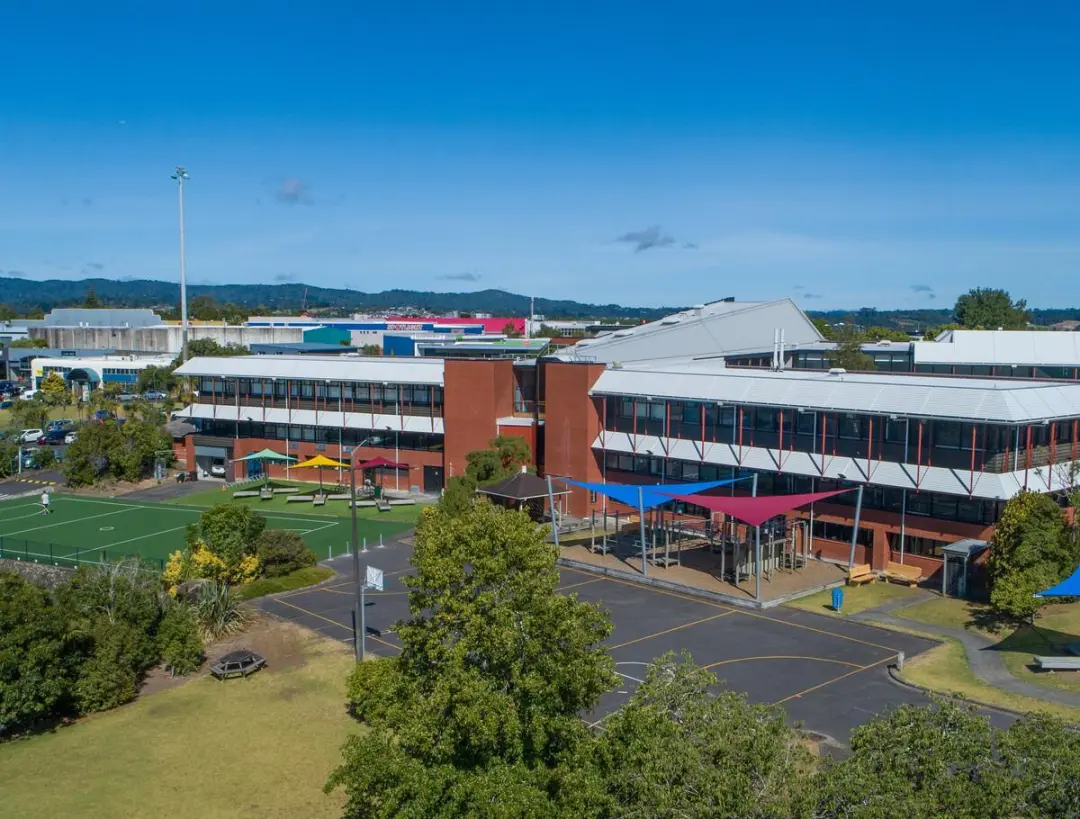
ACG Sunderland’s facilities include modern classrooms, dedicated science laboratories, extensive library resources, a music and drama auditorium seating 250, indoor sports facilities and outdoor playing fields. Children gain knowledge in class and can also find their place in extracurricular activities. The school’s jazz band, rock band and orchestra regularly perform on and off campus. Its teams have repeatedly won national and regional competitions, with achievements including a national chess championship, athletics medals and strong results in skiing and tennis.
Here, children gain knowledge while developing their interests in music, sport, art and technology, building teamwork, leadership and creativity. Academic learning and personal interests, classroom experiences and everyday life are brought together, allowing children to grow in multiple ways and giving every child a chance to shine in their strengths.
Building transferable skills from preschool: quality early childhood education at ACG Sunderland
Alongside education from Years 1–13, ACG Sunderland offers a preschool programme designed for its youngest learners, catering for children aged 3 months to 5 years. Children receive more than care here: they begin structured early learning in a stimulating, nurturing environment.
At preschool, children gradually develop language, cognitive and social skills, emotional regulation and independence through play and exploration. The programme draws on the Reggio Emilia approach alongside New Zealand’s Te Whāriki early childhood curriculum. Stories, hands-on experiences, inquiry activities and group collaboration help children naturally develop an understanding of rules, learning habits and confidence in everyday life.
The preschool also offers a wide range of activities, including music, dance, baking, cultural celebrations and Playball multisport sessions. These activities develop physical coordination as well as teamwork, patience, social skills and self-management.
Through this early education, children enter primary school with good learning habits, a spirit of exploration and independence. This helps them adjust more comfortably to primary school while laying a strong foundation for future learning.
A final question: is it worth the money? The answer lies in the children themselves
Returning to the original question: is private school worth it?
If marks are the only measure, opinions may differ. But if you want your child to:
-
develop the capacity for lifelong learning;
-
discover their true interests and direction;
-
grow in an environment where they are respected and supported;
-
and still value their educational experience many years later—
these real student stories suggest that ACG Sunderland’s answer is clear: it helps children achieve academically while opening up more possibilities in their lives.
Here, every child can become their best self, whether as an academic high achiever, future engineer, media professional or versatile enthusiast for the arts and sport. The school offers knowledge, methods, habits and confidence that will stay with children throughout their lives.