
Housing is becoming more affordable, so why are buyers more cautious? A new warning sign in New Zealand’s housing market
New Zealand’s property market has undergone a sharp correction over the past few years. The worst may be over, but the real challenges facing the market are changing.
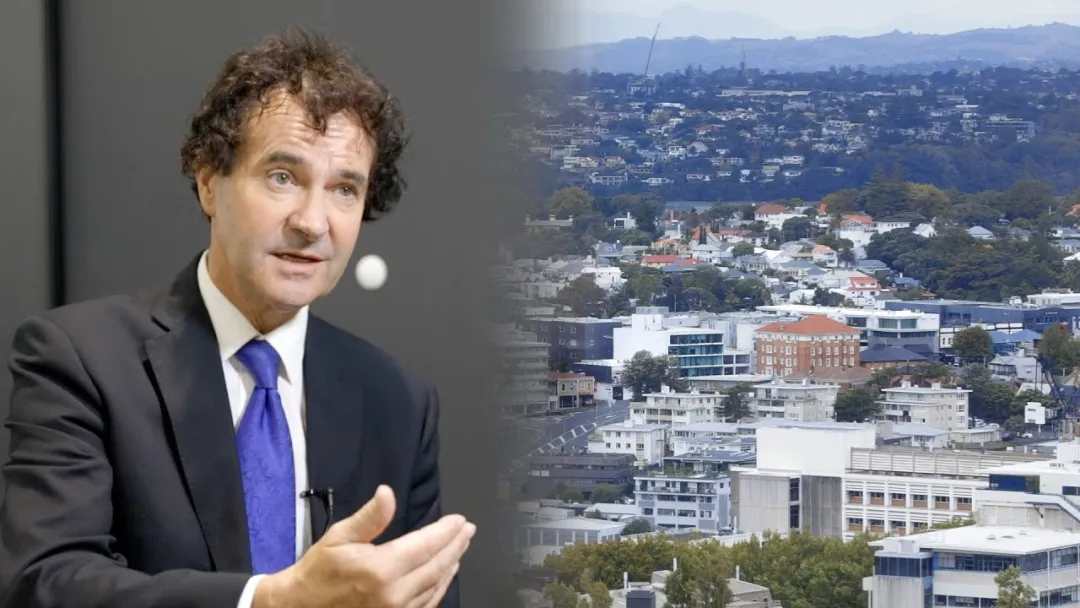
New Zealand’s property market has undergone a sharp correction over the past few years. The worst may be over, but the real challenges facing the market are changing.
From rapid price rises during the pandemic to several years of declines and flat prices, market sentiment has shifted from “What if I miss out?” to “What if I make the wrong purchase?”
Yet several recent major reports reveal a development worth watching: housing affordability is improving and prices are broadly stabilising, but buyer confidence has not recovered alongside them.
Auckland house prices remain high, but affordability has improved markedly
According to the newly released Demographia International Housing Affordability report, Auckland currently ranks 15 among the world’s least affordable major cities for housing.
That ranking still looks high, but the situation has improved considerably compared with a few years ago.
In 2022, Auckland’s house price-to-income ratio, or Median Multiple, reached 11.2, meaning the median home cost 11.2 times the median household income. The latest figures show that this ratio has fallen to 7.7.
Although international standards still classify markets with a ratio above 3 as facing significant housing affordability pressure, a ratio of 7.7 is undoubtedly a substantial improvement on 11.2.
More surprisingly, the latest rankings show Auckland’s housing is now more affordable than that of Australia’s five major cities.
The rankings are:
-
Sydney ranks 2
-
Adelaide ranks 4
-
Brisbane ranks 8
-
Melbourne ranks 9
-
Perth ranks 13
-
Auckland ranks 15
For many investors who have long followed the Australian and New Zealand property markets, this may be an unexpected shift.
Meanwhile, the latest figures put Auckland’s median house price at around NZ$1,040,000, still about 23% below the market peak in 2022.
The correction in house prices and gradual improvement in household incomes have together helped restore housing affordability.
However, improved affordability has not immediately translated into a more active market.
The latest REINZ figures show that house prices are broadly stabilising nationwide, with some regions even recording increases. Yet sales volumes remain below the same period last year, and the number of homes on the market remains high.
This suggests that many buyers can afford to enter the market but are still choosing to wait.
Buyers are concerned about more than house prices
Current market conditions suggest that house prices alone are not determining buyers’ decisions.
Although price corrections and falling interest rates over recent years have improved buying conditions, market sentiment has not picked up at the same pace.
The recent rebound in international oil prices has prompted some market observers to refocus on inflation risks, while the approaching November election has also led many households and investors to wait and see.
Meanwhile, recent signals from international financial markets are reinforcing this caution.
This week, the US Federal Reserve held interest rates unchanged for the fourth consecutive time. However, despite earlier market expectations of future cuts, the Fed’s latest economic projections show that policymakers are divided over the outlook for interest rates. Market expectations about the timing and scale of cuts have consequently become more cautious. Meanwhile, US retail sales in May exceeded market expectations, showing that consumer spending remains resilient.
For global financial markets, this means inflation risks have not fully receded. Although international oil prices have eased from recent highs, geopolitical developments could still influence energy markets, with energy prices often feeding through into transport costs, goods prices and overall inflation.
These seemingly distant international developments are relevant to New Zealand. As a highly open economy, New Zealand’s funding costs and lending rates are heavily influenced by global financial conditions. Although the Reserve Bank of New Zealand has lowered the Official Cash Rate (OCR) over the past year, market expectations for future interest rates are clearly less optimistic than they were a few months ago.
For many potential buyers, the main concern is no longer whether house prices will keep falling, but whether future borrowing costs, employment prospects and the wider economy will remain stable.
This caution is also reflected in sales figures. There are still plenty of homes on the market, but buyers are generally spending more time comparing and assessing properties, and are committing to purchases noticeably more slowly than in previous cycles.
What the property market most needs to recover now may be confidence rather than prices.
Tony Alexander issues an interest rate warning
Against this backdrop, recent comments by well-known independent economist Tony Alexander have attracted market attention.
He suggests borrowers consider locking in a three-year fixed mortgage rate in the current environment, rather than continuing to bet on further falls in short-term rates.
In his view, current market expectations for future interest rates may be too optimistic.
Although two-year fixed rates are usually slightly lower than three-year rates, a three-year mortgage term can give households greater certainty over their budgets for longer.
Alexander believes the risk of inflation picking up again over the next two years has not entirely disappeared, so expectations of continued interest rate declines may not all be realised. For households with mortgages, uncertainty about future interest rates remains an important consideration.
An overlooked shift is taking place
House prices are no longer rising as rapidly as they did in 2021, housing affordability is recovering, there are still plenty of homes on the market, and mortgage rates are well below the highs of the previous two years;
Even so, buyers are becoming more cautious in their decisions.
This suggests New Zealand’s property market is entering a new phase. In the past, house prices themselves were the main factor determining the market’s direction. Now, confidence is increasingly taking that role.
Buyers are assessing more than whether house prices are high or low. They are also considering whether their future income will be stable, whether mortgage rates will rise again, whether inflation will return, whether economic growth can be sustained, and whether the policy environment will change.
The answers to these questions are having a deeper influence on the market than house prices themselves.
Observations and reflections
Over the coming months, the Reserve Bank of New Zealand’s interest rate decisions, inflation trends, labour market performance and policy direction after the November election could all affect market confidence. Meanwhile, US interest rate policy, developments in the Middle East and fluctuations in international energy prices are also influencing global funding costs and investor expectations.
Recent signals from international markets suggest that global inflation risks have not fully subsided, and the outlook for interest rates remains uncertain. In this environment, homebuyers are concerned not just about house prices, but also about whether future borrowing costs will remain affordable.
For the property market, the most important driver of the next cycle may be renewed faith in the future rather than rising house prices. When more buyers begin to believe that their incomes are stable, interest rates are predictable and the economic outlook is clear, market activity often picks up first.
After all, at this stage, it is no longer just house prices holding back a further housing market recovery. Confidence is also a constraint.