
To raise or not to raise? Reserve Bank of New Zealand faces its toughest interest rate decision this year
Markets put the chance of a rate rise as high as 75%, yet economists are unusually split into two camps. Falling international oil prices, persistent inflationary pressure and an economic recovery that has yet to find firm footing are all in play. Against this backdrop, the Reserve Bank of New Zealand's interest rate decision this Wednesday is considered its toughest policy choice of the year.
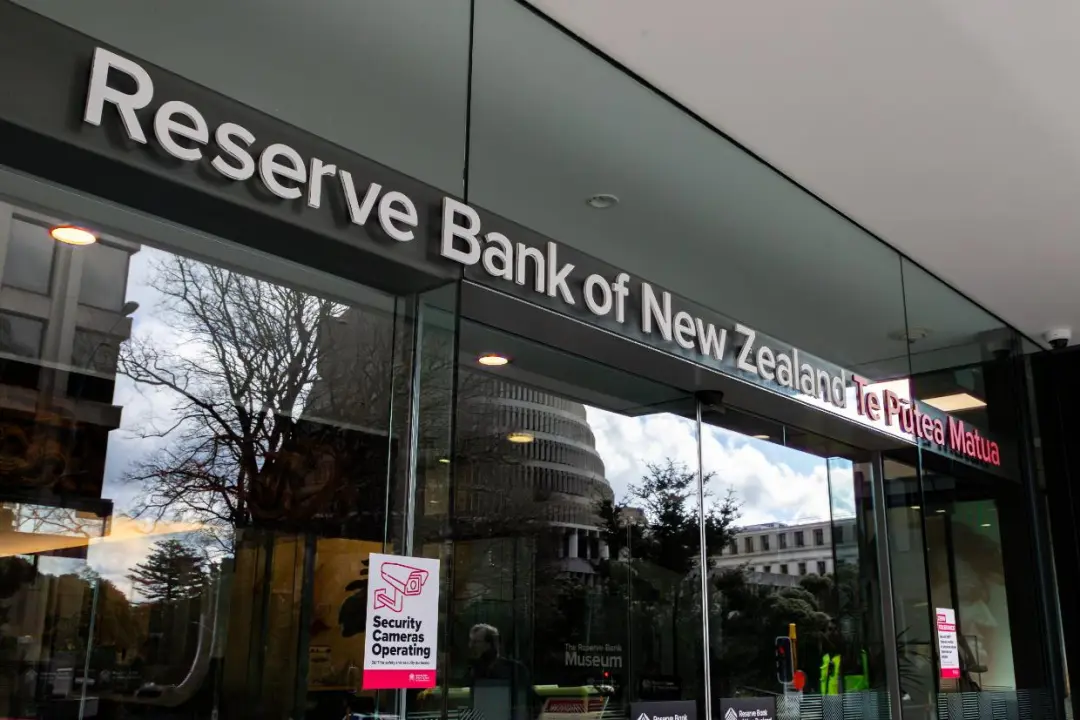
Markets put the chance of a rate rise as high as 75%, yet economists are unusually split into two camps. Falling international oil prices, persistent inflationary pressure and an economic recovery that has yet to find firm footing are all in play. Against this backdrop, the Reserve Bank of New Zealand's interest rate decision this Wednesday is considered its toughest policy choice of the year.
At 2 pm on Wednesday 8 July, the Reserve Bank of New Zealand will announce its latest Official Cash Rate (OCR) decision.
For many households, this is more than a financial policy decision: it also bears on future mortgage rates, term deposit returns, the New Zealand dollar exchange rate and the direction of the property market.
Expectations for this rate meeting have shifted markedly over recent weeks. After the Reserve Bank of New Zealand released its Monetary Policy Statement at the end of May, many institutions saw a first rate rise in July as virtually certain. Yet more than a month later, easing Middle East tensions and a rapid fall in international oil prices have once again clouded what had seemed a clear policy path.
Financial markets currently still put the probability of the Reserve Bank of New Zealand raising rates by 25 basis points at around 75%. Surprisingly, however, economists at major banks and research institutions are divided to a degree rarely seen in recent years, with support for an immediate rise and for waiting almost evenly balanced.
Wednesday's announcement will therefore deliver more than an interest rate figure: it could determine the overall direction of New Zealand's monetary policy for the second half of the year.
The case for a rise: returning monetary policy to normal
Those supporting a rate rise argue that the central issue is no longer international oil prices, but whether monetary policy remains too accommodative.
The Official Cash Rate currently stands at 2.25%, while the Reserve Bank of New Zealand estimates the neutral interest rate at around 3%. The neutral rate is the level that neither stimulates nor restrains the economy. In other words, the current rate remains below normal. Economists supporting a rise argue that with rates still below neutral, excessively accommodative monetary policy could increase future inflation risks.
BNZ head of research Stephen Toplis believes the Reserve Bank of New Zealand should return the Official Cash Rate to neutral as soon as possible, preventing accommodative policy from continuing to fuel future inflationary pressure. Once rates are back within the normal range, it can decide its next move based on the latest economic data.
ANZ chief economist Sharon Zollner also believes that although international oil prices have fallen, the New Zealand dollar remains weaker than the Reserve Bank of New Zealand previously forecast, economic activity continues to improve, and inflation is expected to remain above the target range over coming quarters. In these circumstances, starting rate rises sooner is more consistent with risk management principles than continuing to wait.
HSBC chief economist for Australia and New Zealand Paul Bloxham said the Reserve Bank of New Zealand had already sent a relatively clear policy signal in May. The economy no longer needs such accommodative monetary conditions, and it is time to take the first step towards policy normalisation.
Many economists supporting a rate rise share another concern: waiting until all the data conclusively shows inflation picking up again could force larger, more frequent rate rises later, at an even greater cost.
The case against a rise: the risks have changed
On the other side, institutions including ASB, Westpac and Kiwibank believe now is not the best time to raise rates.
Over recent months, the market's greatest concern was that Middle East conflict would push up international oil prices, further lifting New Zealand inflation through transport, energy and other costs.
That risk has now eased considerably.
As tensions between the United States and Iran ease, international crude oil prices have fallen, and New Zealand petrol prices are also below the levels used in the Reserve Bank of New Zealand's May forecasts.
For this reason, ASB recently revised its forecast for a rate rise in July, and now expects the Official Cash Rate to remain at 2.25%.
Westpac chief economist Kelly Eckhold believes that since the end of May, there has been insufficient new evidence that wage pressures are broadening, and no sign of long-term inflation expectations continuing to rise. Instead, falling energy prices have eased business and consumer concerns about future price increases.
Kiwibank chief economist Jarrod Kerr believes New Zealand is not currently experiencing a wage-price spiral. Present inflation stems more from external factors such as international energy prices than from overheated domestic demand.
In his view, this looks more like a supply shock than persistent inflation caused by an overheating economy. In these circumstances, the Reserve Bank of New Zealand should be patient and allow the economy to keep recovering, rather than rush to tighten monetary policy.
The disagreement is really about timing, rather than direction
A close look at the institutions' views reveals considerable common ground. Almost all economists acknowledge that international oil prices have fallen markedly, and there is broad agreement that the Official Cash Rate could still rise further this year.
The real disagreement is over when rate rises should begin.
Supporters of a rise believe the first step should be taken now to gradually return monetary policy to normal, with subsequent action determined by economic performance.
Those with reservations argue that since imported inflationary pressure has eased, it would be reasonable to observe conditions for a few more months and wait for more data before deciding.
The debate is therefore less about whether to raise rates than about when to start.
Another focus: will the Monetary Policy Committee's vote be tied again?
Beyond the interest rate decision itself, another detail deserves attention this week: the Monetary Policy Committee's voting result.
In May this year, the committee's six members split 3 to 3 over whether to raise rates. The Official Cash Rate remained at 2.25% only after Reserve Bank of New Zealand Governor Anna Breman cast the deciding vote.
This shows that even within the Reserve Bank of New Zealand, significant differences remain over the future inflation outlook and policy direction.
ANZ believes another tied vote this week is possible, with the Governor potentially casting the deciding vote again.
Westpac, however, believes that falling international oil prices could bring greater agreement within the committee than in May. Even if rates are ultimately left unchanged, there may not be another sharp division.
This week's announcement could therefore reveal not only the Official Cash Rate, but also the Reserve Bank of New Zealand's latest assessment of the economic outlook for the coming months.
What should ordinary households watch most closely?
For ordinary households, the main point to watch this week may extend beyond whether the Official Cash Rate rises by 25 basis points or stays unchanged.
The policy signals in the Reserve Bank of New Zealand's post-meeting statement are more likely to shape future mortgage rates, term deposit returns, the New Zealand dollar exchange rate and the property market.
If the Reserve Bank makes clear that further rate rises remain possible over the coming months, commercial banks may well adjust fixed mortgage rates in advance, and term deposit rates could rise further too.
If the Reserve Bank stresses that falling international oil prices have reduced inflation risks and signals a more cautious stance, market expectations of another rate rise in September could ease, helping fixed mortgage rates remain stable.
For anyone considering fixing their mortgage rate, preparing to buy a home or planning a term deposit, these policy signals often matter more than whether rates rise by 25 basis points this time.
Observations and reflections
This week's interest rate decision is attracting close attention not simply because the Official Cash Rate could rise by 25 basis points, but because it reflects a crucial juncture for New Zealand's economy.
Inflation remains above the Reserve Bank of New Zealand's target range of 1% to 3%, with annual inflation expected to reach 4.2% in the second quarter, so controlling prices remains the top priority. Yet falling international oil prices, easing Middle East tensions and a still-weak labour market also give the Reserve Bank reasons for caution.
Those supporting a rate rise want monetary policy to return to normal quickly to prevent renewed inflationary pressure. Those favouring a wait are concerned that tightening too early could undermine an economy only just showing signs of recovery.
Whether the Reserve Bank raises rates or holds steady this week, the overall direction towards gradual monetary policy normalisation will remain unchanged. Markets are more focused on how the Reserve Bank of New Zealand assesses future inflation risks, and whether it signals the direction of interest rates in September and beyond.
For ordinary households, this meeting affects more than an interest rate figure: it also bears on future mortgage costs, savings returns, the New Zealand dollar exchange rate and property market expectations. When the Reserve Bank of New Zealand announces its latest decision at 2 pm on 8 July, markets will be looking beyond the outcome to the statement for a clearer view of where New Zealand's economy is heading next.