
After 755 company liquidations, can New Zealand's construction industry return to the way it was?
Before Christmas last year, Brian Honeybone, aged 67, made a difficult decision: to end his 50-year construction career. The family building company his father founded around 60 years ago had finally entered liquidation.
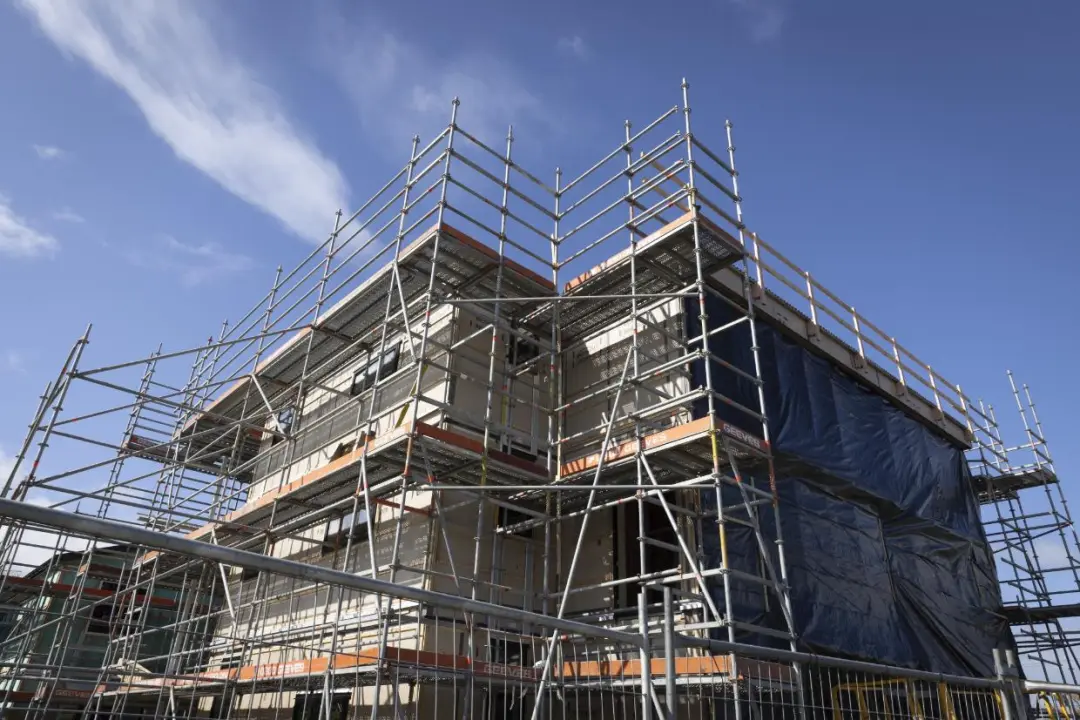
Before Christmas last year, Brian Honeybone, aged 67, made a difficult decision: to end his 50-year construction career. The family building company his father founded around 60 years ago had finally entered liquidation.
According to the liquidators' report, Honeybone Builders is expected to leave a shortfall of around NZ$1,100,000. The longstanding business, which specialised in high-end architect-designed homes and had operated for decades, ultimately could not weather this market downturn.
Looking back on the past few years, Honeybone summed up the experience simply: ‘Everything was hard.’ Everything had become exceptionally difficult.
During the pandemic, the company's cash reserves, accumulated over many years, were steadily depleted. Clients were taking longer to pay, and one payment of eighty or ninety thousand dollars for building work proved unrecoverable. Building material prices kept fluctuating, project margins grew thinner, and clients expected higher quality on smaller budgets.
‘There are no simple transactions or simple houses any more.’ For someone who had worked in construction for half a century, it was a deeply frustrating situation.
Honeybone is not the only construction professional to have left the industry.
Not long ago, the century-old Totem Studio Architects also announced it was entering liquidation. Founded in 1922, the practice had helped design several Christchurch landmarks and was where renowned New Zealand architect Sir Miles Warren began his career. It too ultimately closed as projects were repeatedly delayed and business continued to shrink.
Viewed nationally, these companies are just two names among the 755 construction businesses that entered liquidation over the past year.
Over the past year, construction continued to record more company liquidations than any other industry in New Zealand, accounting for around a quarter of the national total. Meanwhile, the number of building and construction businesses fell by 551 compared with the previous year. The total value of building activity declined for the second consecutive year, while the value of residential building work was down by more than NZ$5,000,000,000 compared with two years earlier.
These figures make clear that the construction industry has undergone an unprecedented adjustment over the past few years.
But focusing solely on the figure of ‘755 company liquidations’ makes it easy to overlook another development unfolding alongside it.
The changes taking place in New Zealand's construction industry go well beyond a simple decline in the number of businesses.
The pandemic is over, but the industry is still dealing with its effects
Many people attribute today's construction industry difficulties to the cooling property market. In fact, the problems began earlier.
During the pandemic, low interest rates, surging housing demand and tight supply drove rapid expansion in construction. Numerous developments got under way, building companies proliferated, and some had work booked years ahead.
What followed changed almost the entire industry.
Building materials were in short supply, freight costs rose, labour costs kept increasing, and financing conditions tightened rapidly. When demand began to cool, many businesses discovered that operating models built on rapid turnover were no longer sustainable.
Keith McLaughlin, managing director of credit bureau Centrix, sees the continuing liquidations as the culmination of pressures built up over recent years.
A business does not usually fail as soon as it encounters difficulties. When cash flow tightens, it will often first draw on reserves, accept lower margins, delay payments or even borrow to keep operating. Only when those options are exhausted does it enter liquidation.
In other words, many of the business exits seen today reflect problems that have accumulated over the past two or three years.
Changes in the housing market have also forced the construction industry to adapt to new realities.
Homes are taking longer to sell, developers are becoming more cautious, and long delays between project approval and the start of construction are increasingly common. The era when continued expansion alone could deliver growth has quietly ended.
There is still work, but making a profit is getting harder
Ask builders who are still operating today, and many will say there is work available, but it is increasingly difficult to make money.
QV quantity surveyor Martin Bisset believes the work is still there, but margins have been steadily squeezed.
Many construction businesses would rather take on projects at lower margins to keep their teams working than be forced to lay people off for lack of work.
Competition is intensifying, and quotes require greater care. Quote too high and a competitor may win the project; quote too low and later changes in material, freight or labour costs could turn the entire job into a loss.
This risk is particularly pronounced for small and medium-sized building companies. A large business may have greater cash reserves and a broader project pipeline, while a smaller builder may need only a project or two to be delayed, or a single payment to go unrecovered, for its entire cash flow to be affected.
The unrecoverable payment Honeybone faced was not the only reason the company failed, but it illustrates a challenge shared by many small and medium-sized businesses.
Over the past few years, New Zealand's construction industry has experienced more than a market slowdown. The underlying approach to doing business has changed.
Previously, many businesses focused on winning more projects.
Today, growing numbers first ask whether a project is worth taking on, whether it will make money, and whether the company can bear the risks involved.
The market is not as cold as it may seem
Over the past few months, another set of figures has sent a different signal.
Residential building consents have started growing again in some regions, construction job advertisements are up 35% on the same period last year, building material prices are gradually stabilising, and the emergence of new cases of seriously overdue debt among construction businesses has also begun to slow.
These changes do not yet indicate a full industry recovery, but they do show that the market is no longer uniformly declining.
Canterbury is one example. In April this year, residential building consent numbers were almost double those of the same period last year. Some builders reported a marked increase in sales enquiries, while large home-building businesses had not accumulated substantial unsold stock. Compared with regions where house prices are higher, Canterbury's greater affordability continues to attract many buyers.
This is a reminder that New Zealand's construction markets have never all moved at the same pace. Some regions are still adjusting, others are beginning to recover, and more businesses are choosing to slow down and reassess how they operate.
The real change is in how the industry does business
In interviews, almost every industry participant raised the same word: uncertainty. The greatest pressure comes from not knowing where next year's work will come from.
Many contractors say they have enough projects to last until the end of this year, but their order books for 2027 remain uncertain. For construction businesses that need to maintain teams, equipment and cash flow, this uncertainty is harder to manage than a brief market downturn.
Over the past few years, construction has endured the pandemic, a supply chain crisis, rising costs, climbing interest rates and a cooling property market. Each shift has redefined the industry.
Previously, many businesses competed on scale and speed. Today, they compete on cash flow, risk management and cost control.
In the past, a rising market could conceal many problems. Now, every project requires a more careful risk assessment and every quote needs more detailed calculations.
This change is also affecting developers. More are considering whether their homes truly meet market demand, rather than simply pursuing higher density or more dwellings. More buyers, meanwhile, are accepting smaller homes with more reasonable overall prices, seeking a new balance between their budgets and quality of life.
The construction industry faces an adjustment in business thinking as well as in market conditions.
This brings us back to the question at the start: can the construction industry return to the way it was?
Can New Zealand's construction industry return to the way it was?
The answer may be that it will recover, but will not return entirely to its former state.
Housing demand has not disappeared, New Zealand's population is still growing, and infrastructure construction will continue. There will still be new opportunities for the industry.
But the era of growth driven by low interest rates, rapidly rising house prices and fast expansion has changed.
New Zealand's construction industry may grow more slowly in future, and margins may be lower than before. But the industry as a whole will place greater emphasis on cash flow, risk management, product positioning and the ability to operate sustainably over the long term.
Future competition may depend more on a company's ability to control costs, manage cash flow and adapt to market changes.
The exit of 755 businesses records this round of industry adjustment. Those that remain will seek their own paths forward in a new market environment.
Perhaps that is the real significance of this industry shake-up.
Your story deserves to be heard
The liquidation of 755 businesses is a statistic. Behind each business is a real experience.
If you work in New Zealand's construction industry, whether as a developer, builder, designer, engineering consultant or building material supplier, we welcome you to share your story.
What challenges have you faced over the past few years? How have you responded to a changing market?