
New Zealand unemployment hits an 11-year high: why the reluctance to ease up on rate hikes? The Reserve Bank sends an important signal
As more New Zealanders worry that jobs are becoming harder to find, inflation remains the Reserve Bank of New Zealand's main focus.
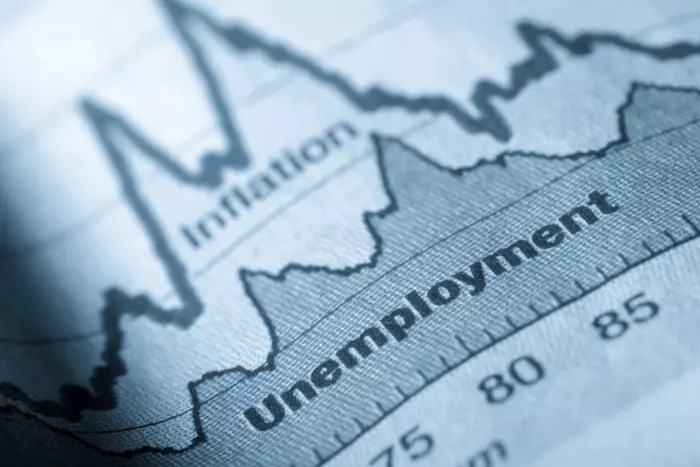
As more New Zealanders worry that jobs are becoming harder to find, inflation remains the Reserve Bank of New Zealand's main focus.
The latest employment figures released today by Stats NZ show the national unemployment rate rose to 5.6% in the second quarter of this year, exceeding market expectations and reaching its highest level in nearly 11 years. On the same day, Reserve Bank of New Zealand Governor Anna Breman reiterated that restoring low and stable inflation remains the foremost priority for economic policy.
Rising unemployment has not changed market expectations of further interest rate increases. Most financial institutions still expect the Reserve Bank to raise the Official Cash Rate (OCR) further to 2.75% on 2 September. The labour market continues to cool, yet monetary policy may tighten further. This apparent contradiction reflects one of the most complex challenges New Zealand's economy has faced in recent years.
Unemployment hits an 11-year high as wage growth continues to lag inflation
The latest figures show New Zealand's official unemployment rate has risen from a revised 5.4% in the first quarter to 5.6%. About 171,000 people nationwide are unemployed, an increase of roughly 8000 from the previous quarter.
Meanwhile, the labour underutilisation rate, which reflects the underlying pressures in the labour market, rose to 13.8%, its highest level since 2013. This measure includes not only unemployed people but also part-time workers who want more hours and cannot find them, giving a fuller picture of labour market conditions than the unemployment rate alone.
Long-term unemployment is also concerning. Around 19% of unemployed people have now been out of work for more than a year. The number of long-term unemployed has increased by about 8000 over the past year, indicating that more jobseekers are finding it harder to return to work.
Although total employment still increased by about 13,000 people to more than 2,900,000, the labour force participation rate also rose to 70.7%. This means more people returned to the labour market to look for work, ultimately pushing up the overall unemployment rate.
Wage growth has also failed to keep pace with the rising cost of living.
In the year to June, average hourly earnings rose 2.9% while inflation reached 4.1% over the same period. For many households, this means that even those who have kept their jobs are seeing income growth lag behind rising prices, with their purchasing power continuing to decline.
Why is the Reserve Bank still focused on fighting inflation as unemployment rises?
Many people will have the same question: with the labour market clearly weakening, why has the Reserve Bank still not signalled an end to rate hikes?
Anna Breman said the Reserve Bank has been closely monitoring changes in the labour market and understands the pressure on businesses and households. However, without a return to low and stable inflation, economic growth, business investment and the labour market will struggle to truly recover.
In her view, high inflation is itself an obstacle to economic development. Easing monetary policy too soon could not only cause inflation to rebound, but also undermine business and consumer confidence, ultimately affecting the economy's long-term recovery.
She said:
“To truly get the whole economy growing again, we need to return to an environment of low and stable inflation, because that will support economic growth, strengthen market confidence and lift overall demand.”
In the Reserve Bank's view, controlling inflation is an important prerequisite for restoring employment.
The OCR could rise further in September
Despite the continued cooling of the labour market, financial markets still widely expect the Reserve Bank of New Zealand to raise the OCR further to 2.75% in its next monetary policy announcement on 2 September.
This expectation is being driven not by an economy overheating again, but by renewed risks of imported inflation as international oil prices rise and tensions in the Middle East persist.
Anna Breman said the Reserve Bank is not currently tightening monetary policy sharply, but gradually withdrawing the exceptionally loose stimulus measures introduced during the pandemic, in the hope of preventing inflation expectations from getting out of control again.
She also acknowledged that setting policy is difficult at present. The Reserve Bank must bring inflation back within its target range while seeking to minimise the impact on economic growth, employment and the exchange rate. Every step requires careful consideration.
Market expectations build as banks move first to raise mortgage rates
Market expectations that the Reserve Bank may raise interest rates further in September have already begun to feed through to mortgage rates at the major banks.
Following ANZ and Westpac, BNZ announced increases to several fixed mortgage rates on 5 August, becoming the third major bank to raise fixed mortgage rates recently. Rates rose across all fixed terms except the five-year term, which remained at 5.49%. The two-year, three-year and four-year fixed rates were all adjusted to 5.45%, suggesting the major banks' views on the future direction of interest rates are converging.
For now, ASB and Kiwibank are maintaining lower advertised rates. Their one-year fixed rates, for example, remain at 4.75%, while Kiwibank offers the lowest two-year rate at 5.19%. However, the market generally believes this window of lower rates may not last long, and further increases in line with other banks remain possible.
By comparison, challenger banks such as Co-operative Bank, SBS Bank and TSB Bank still offer some mortgage products with a degree of interest rate advantage. Analysts say these banks rely more heavily on deposit funding, so their rate changes may not follow market swap rates exactly, potentially allowing them to retain some competitiveness in the short term.
Not every sector is slowing
Although labour market pressures continue to mount, the Reserve Bank does not see weakness across the entire New Zealand economy.
Anna Breman noted that business and consumer confidence have both improved recently. Agriculture, manufacturing and export-related industries remain relatively resilient, providing important support for the economy.
By contrast, the sectors under real pressure remain those dependent on domestic spending, including retail, hospitality and some services. With households still cautious about spending, hiring demand in these sectors is recovering noticeably more slowly than in export-related industries.
The Reserve Bank's role comes under renewed debate
As unemployment continues to rise, debate over the Reserve Bank's policy objectives has intensified again.
New Zealand First leader Winston Peters recently publicly criticised the government's removal of the Reserve Bank's former dual mandate to control inflation and promote full employment. He argued that the Reserve Bank is now more focused on controlling prices, while the labour market bears a greater cost.
In response, Anna Breman said the Reserve Bank's responsibilities are determined by the government and Parliament. Its role is to implement policy in accordance with its statutory duties, rather than take part in political debate.
Meanwhile, an independent review of the Reserve Bank of New Zealand's monetary policy during the pandemic is expected to be released next month. With its release close to the November general election, the report is also expected to reignite public debate about monetary policy.
What should ordinary households watch?
For ordinary households, the signals from these employment figures deserve attention.
For those looking for work, competition may intensify over the coming months, particularly for graduates and those seeking retail and administrative roles.
For those planning to change jobs or seek a pay rise, scope for wage growth may remain limited as businesses broadly seek to control costs.
For households repaying mortgages, if the OCR rises again in September, fixed mortgage rates may remain high in the short term, making a substantial fall in borrowing costs unlikely.
High interest rates will also continue to affect the property market. With homebuying costs remaining elevated, the housing market recovery may slow. However, once inflation returns to the target range, it will create conditions for rate cuts, potentially bringing a fresh turning point for the property market.
Observations and reflections
Unemployment reaching its highest level in nearly 11 years undoubtedly sounds a warning for New Zealand's economy. But the Reserve Bank's policy signal deserves even more attention than the figure itself: even with the labour market under sustained pressure, controlling inflation remains the foremost priority.
Over the past few years, rising prices and mortgage costs have been people's greatest concerns. Now the labour market is becoming a new focus for more households. Finding a balance between stable prices and secure employment will be the greatest challenge for New Zealand's economic policy in the period ahead.
Ordinary households may still need to prepare for pressure over the coming months. For investors, future inflation trends, the direction of Reserve Bank policy and whether business confidence can continue improving deserve more attention than the unemployment figure alone. Together, these factors will determine when New Zealand's economy truly emerges from its adjustment period.
In the current circumstances, do you think New Zealand should continue to make controlling inflation its top priority, or should it ease the pace of rate hikes somewhat and give greater priority to stabilising employment?