
4000 new homes could bring 12,000 residents, with 10-storey apartments also on the horizon? A blessing or a burden for this Auckland community?
Another large site in Mt Albert has been put on the market.
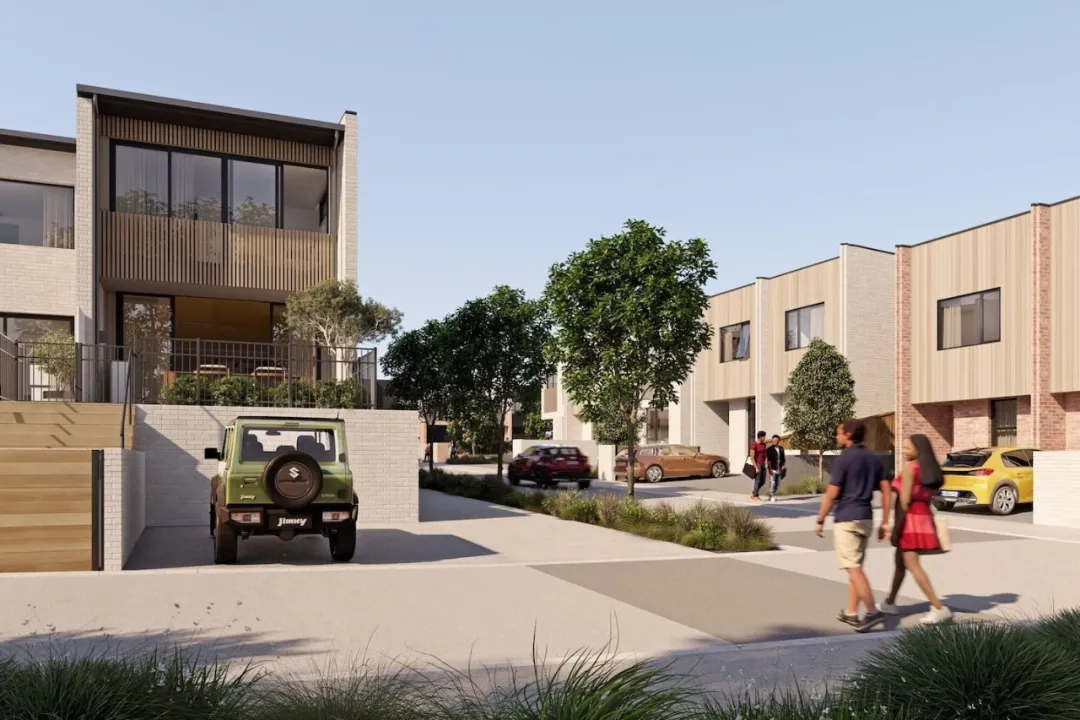
Another large site in Mt Albert has been put on the market.
The 3.8-hectare site near Linwood Avenue is currently used by the Auckland Institute of Studies and was previously home to St Helens maternity hospital. Existing planning rules allow residential development here. If Auckland’s Plan Change 120 is approved, apartment buildings of up to 10 storeys could eventually be built.
Viewed simply as a land sale, it may seem unremarkable. But zoom out on the map and the site is only about 1.5 kilometres from the former Unitec campus at Carrington.
The Carrington project plans at least 4000 homes, expected to accommodate around 12,000 people. With another large site nearby now on the market, Mt Albert may be facing more than a few additional apartment buildings: it could see a substantial change in the community’s population and way of life.
Why Mt Albert again?
From an urban planning perspective, it is unsurprising that Mt Albert has become a focus for high-density residential development.
It is close to the city centre, with relatively well-established train services, buses, schools, shops and parks. The Linwood Avenue site is within walking distance of Baldwin Avenue station, one of five Auckland train stations around which the Government requires higher housing density.
Under the Government’s requirements, the council must amend its planning rules to allow buildings of 10 to 15 storeys within walking distance of these stations.
The thinking is this: rather than allowing Auckland to keep sprawling outwards and pushing more residents further from the city centre, add housing near train stations and established communities. This can make more efficient use of land and public transport, while creating opportunities for more apartments and smaller homes, giving first-home buyers and young families greater choice.
Mt Albert MP Helen White also said she did not oppose residential development on the site, particularly if a new project could provide housing that local young people could afford.
She pointed to her own experience. When she bought a home in the electorate, it cost NZ$142,000, roughly three times her and her partner’s combined income. Today, local house prices may be around ten times household income.
The central question is therefore whether other facilities can keep pace as more homes are added, rather than whether Mt Albert should develop.
Local schools are already close to capacity
Schools are currently the biggest concern.
Helen White said secondary schools in and around Mt Albert were effectively close to capacity, with Mount Albert Grammar School currently having about 3800 students.
“You cannot have a school with 3800 students without starting to plan the next school.”
Secondary school options in the zones covering the Linwood Avenue site are already limited, mainly comprising Mount Albert Grammar and Elim Christian College. Earlier this year, local schools warned about the potential increase in student numbers from the Carrington project. As housing becomes denser, schools face sustained growth in enrolment demand rather than short-term fluctuations.
But when White asked the Ministry of Education about plans for new schools in Carrington and the surrounding area, she was told that a new school was not currently a priority.
The Ministry of Education said the scale of the Carrington project had been incorporated into Auckland’s long-term school network planning. Decisions on whether to build new schools or expand existing capacity would depend on projected student numbers, available places, housing growth, population forecasts and available funding.
From the ministry’s perspective, there are reasons for this caution. Parts of the Carrington development plans remain in Environment Court mediation, and the Linwood Avenue site has only just been listed. Who will buy it, when it will be developed and how many homes will ultimately be built are all uncertain.
Councillor Julie Fairey also noted that, in a market where financing is difficult and development activity has slowed, a project might not actually begin for years even after a developer buys the land.
The problem, however, is that building a new school also takes time. From site selection and land acquisition to budget approval, design and construction, a school cannot appear overnight once large numbers of students arrive.
Housing planners are calculating how many people could live there in future, while education officials need to wait for clearer population and student numbers. Each system has its own logic, but their timelines can easily fall out of step. By the time demand becomes fully apparent, existing schools may already be overwhelmed.
As housing grows, who is responsible for other facilities?
High-density development certainly has benefits.
More housing allows more people to live in established urban areas with good transport links and can reduce further uncontrolled urban sprawl. For Auckland, which has long faced pressure from high house prices, refusing to increase housing supply is not a realistic solution.
But a community capable of accommodating more than ten thousand additional residents needs more than homes. Schools, early childhood centres, parks, roads, buses, healthcare services, sports grounds and community facilities must all respond to population growth.
Julie Fairey considers Linwood Avenue a suitable location for more housing, with opportunities to create high-quality public spaces within the development. But she also acknowledged that Mt Albert would need further investment as its population grows.
Albert-Eden Local Board chair Margi Watson also said it was not yet known who would buy the site, let alone what its eventual use would be. If it is developed for housing, the local board will focus on whether parks, community facilities and other local infrastructure can meet residents’ needs.
The real difficulty is that these matters do not fall under a single agency.
Housing density and building heights are largely determined by government policy and council planning. Schools are the Ministry of Education’s responsibility. Roads, parks and community facilities involve the council and local boards. Whether a project actually starts also depends on developers, financing conditions and market demand.
Each party has its own budget and timetable. Planning rules may allow thousands of additional homes on paper, but schools, parks and transport infrastructure may not receive funding at the same time.
The result could be a situation familiar to Auckland residents: homes are built and people move in first, with discussions about remedies beginning only after schools fill up, roads become congested and public facilities come under pressure.
It is not too late to discuss this now
The Carrington project still faces some uncertainty.
Appeals have been lodged over the scale of development allowed by Plan Change 94 and the project’s potential effects on the community and environment, with the disputes now in Environment Court mediation. Around 1500 homes that already have consent can proceed, but construction of the additional homes enabled by the plan change cannot begin until the appeals are resolved.
The future of the Linwood Avenue site is also undecided. A new owner may retain its current use or propose a residential development. Even if development is chosen, construction could still be years away.
However, these uncertainties do not mean infrastructure issues can be set aside for now. On the contrary, this may be the best time to reserve space for schools, transport and community facilities.
Once projects have all been approved, land prices have risen further and construction of thousands of homes is under way, finding school sites or adding public facilities will offer fewer choices and cost more.
Mt Albert can continue to accommodate more housing. Its location, public transport and existing amenities make it better suited to medium- and high-density housing than many of Auckland’s outer areas.
But being an established community does not mean having unlimited capacity.
When planning rules allow 10-storey apartments and a single project is expected to bring 12,000 residents, schools and other public facilities should be discussed in advance, rather than waiting until problems arise to begin calculating demand.
The debate unfolding in Mt Albert today is likely to emerge around more Auckland train stations in future. Whether Auckland can plan schools, transport and community facilities alongside additional housing will determine whether this round of urban intensification brings more convenient living or more crowded communities.
Do you think Mt Albert is ready for this kind of development?