
Rare agreement among the five major banks: OCR could reach 2.75% on Wednesday. What will happen to mortgages, house prices and new housing supply?
New Zealand’s interest rate outlook is approaching a pivotal moment.
New Zealand’s interest rate outlook is approaching a pivotal moment.
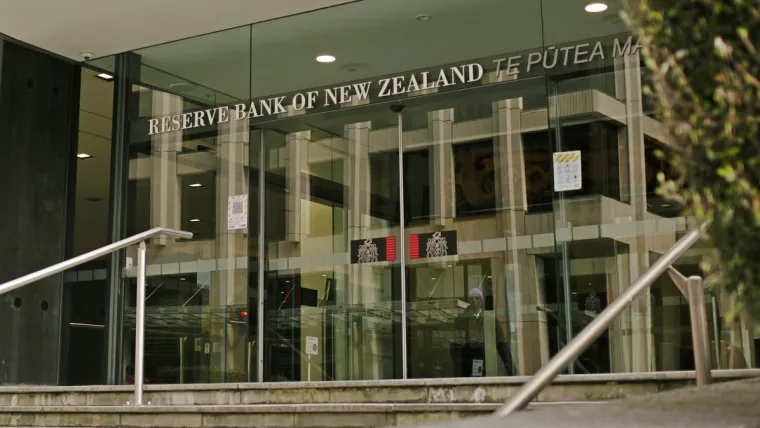
This Wednesday, the Reserve Bank of New Zealand will release its latest Monetary Policy Statement. In a rare consensus, economists at ANZ, ASB, Westpac, BNZ and Kiwibank expect the Official Cash Rate (OCR) to rise by another 25 basis points, from 2.50% to 2.75%.
If the forecasts prove correct, this will be the Reserve Bank of New Zealand’s second consecutive rate rise. In July this year, it delivered its first increase in more than three years and signalled clearly that monetary policy might need to become less stimulatory to stabilise inflation at around 2% again.
Beyond whether rates rise on Wednesday, markets are focused on how far the OCR will go after 2.75%. For the property market, this will directly affect mortgage rates, buyer affordability, investment returns and residential development.
Why raise rates when the economy is still weak?
Inflation remains the main driver of expectations for this rate rise.
In the second quarter of this year, New Zealand’s Consumer Price Index (CPI) rose 4.1% year on year, above the Reserve Bank’s earlier forecast of 3.9% and the highest level since the fourth quarter of 2023.
The Reserve Bank of New Zealand’s mandate is to keep medium-term inflation within a target range of 1% to 3%, with a focus on the 2% midpoint. Inflation of 4.1% is clearly still too high. The Reserve Bank is concerned that current price rises could further influence businesses’ and consumers’ pricing expectations, making inflationary pressure more persistent.
Meanwhile, New Zealand’s economy is far from strong.
Unemployment rose to 5.6% in the second quarter, its highest level in more than a decade, with the official number of unemployed reaching 166,500. The rate was also above the Reserve Bank’s earlier forecast of 5.4%. However, employment numbers and wage growth were slightly stronger than it had forecast, and some recent economic activity indicators have begun showing signs of improvement.
This leaves the Reserve Bank in a dilemma: the economy and employment remain fragile, but inflation is not low enough to allow monetary policy to remain accommodative. In these circumstances, moving the OCR towards what the Reserve Bank considers neutral has become the most likely choice. A neutral interest rate is one at which monetary policy neither significantly stimulates nor restrains the economy, and is currently generally considered to be around 3%.
2.75% may not be the endpoint
Although the five major banks broadly agree on this week’s rate rise, differences have emerged over how many more increases will follow.
Kiwibank believes a rise to 2.75% this week could be only the second step in a three-step move towards 3%. It expects the Reserve Bank may raise rates again in October before pausing to assess conditions.
ANZ also expects increases of 25 basis points in both September and October, but believes substantial uncertainty in the current economic environment means the Reserve Bank needs to retain flexibility over subsequent decisions.
Westpac is relatively cautious. It believes the Reserve Bank’s intention to move the OCR towards 3% is fairly clear, but whether further increases are needed once rates approach neutral will still depend on inflation, employment and economic activity data.
ASB expects possible increases of 25 basis points in each of September, October and December this year, taking the OCR to 3.25% by year-end. BNZ has the most aggressive forecast, expecting the OCR could reach 4% in May 2027.
Wednesday’s most important information may therefore be the Reserve Bank of New Zealand’s projected OCR path and its commentary on rates in October, December and next year, rather than the figure of 2.75% itself.
Will mortgage rates rise immediately?
If the OCR rises to 2.75%, floating mortgage and revolving credit rates are most likely to be affected first. However, this does not mean all fixed mortgage rates will immediately rise by 0.25 percentage points after Wednesday.
In fact, fixed mortgage rates for terms longer than a year have already started rising recently. Some banks may have already priced in this increase and future interest rate risks. If Wednesday’s decision matches market expectations, medium- and long-term fixed rates may not immediately adjust by the same amount.
Borrowers also face a choice of fixed term. Recently, many have chosen two years to reduce their exposure to further rate rises. But as the gap between one-year and two-year rates widens, some may reconsider a cheaper one-year term, at the cost of facing their next repricing sooner.
Households whose loan terms are about to expire need to consider household cash flow, income stability and their capacity to cope with further increases when choosing a fixed term, alongside the lowest rate available now.
Mortgage demand has already cooled noticeably
Although Wednesday’s decision has yet to be announced, the housing loan market has already started slowing.
New housing lending in New Zealand totalled about NZ$7,900,000,000 in July this year, approximately NZ$1,200,000,000 less than a year earlier. This was the sharpest year-on-year decline since April 2023. Both lending for house purchases and refinancing between banks declined, while activity among owner-occupiers and investors also eased.
Some first-home buyers are still entering the market with low-deposit loans. Of the loans approved for first-home buyers in July, 54% had deposits below 20%, compared with 17% for all owner-occupiers. About 5% of investor loans had deposits below 30%.
These figures show buyers have not left the market entirely, but are more sensitive to repayment pressures and future risks. Some are reducing their budgets, while others are waiting for greater clarity on interest rates, the election and housing policy before deciding.
Investors recalculate returns
Investors are facing particularly pronounced pressure in this market slowdown.
ANZ economists note that net rental yields on investment properties remain historically low relative to current mortgage rates. After council rates, insurance, maintenance, property management and other holding costs are deducted, rental income often struggles to cover financing costs.
When expectations of capital gains are strong, investors may accept short-term cash flow losses. But with house prices lacking clear upward momentum and mortgage rates rising again, relying on future appreciation to offset holding losses is becoming riskier. Uncertainty over the election and future tax policies is also prompting some buyers to wait. ANZ’s lending data already shows a larger decline in investor demand this year than among other buyer groups.
This does not mean every investment property has lost its appeal. Properties with lower purchase prices, stable rental demand and higher rental yields may still attract investment, but investors will place greater weight on actual cash flow rather than simply betting on broad market gains.
House prices still face short-term headwinds
ANZ believes rising interest rates, election uncertainty and potential tax policy changes will be the main headwinds for house prices, with interest rates having the greatest influence.
Higher mortgage rates increase repayment pressure and constrain some buyers’ borrowing capacity and maximum offers. Declining lending activity, weaker investor demand and pre-election caution could also lengthen the time homes take to sell. If the market keeps cooling, some owners keen to sell may need to adjust their price expectations.
Interest rates are only part of what drives house prices, however. Employment, migration, household income, rents and housing supply also matter. If the Reserve Bank delivers only a limited number of increases and pauses as the OCR approaches 3%, the impact on the housing market could be smaller than in the previous large-scale tightening cycle.
Auckland new home completions fall nearly 31% from their peak
As demand slows, Auckland’s housing supply is also contracting.
In June this year, Auckland Council issued Code Compliance Certificates (CCCs) for 1,085 new homes. In the 12 months to June, 13,540 new homes were completed across the city, down 12.3% from the previous year and the lowest level since October 2022.
Compared with the peak in May 2024, Auckland’s annual new home completions have fallen 30.8% from 19,560, a decline of almost a third.
CCCs are usually issued after construction is complete, so they provide a better indication than building consents of how many new homes are actually entering the market. Auckland is currently completing an average of about 1,128 new homes a month, down 12.3% from a year earlier.
This reveals another tension in the current housing market: rate rises are reducing demand for homes, but new housing supply is falling too.
In the short term, weakening supply and demand could keep the market subdued. If high interest rates, financing pressure and construction costs continue affecting project viability, future housing starts and completions could remain under pressure. Once population growth, employment and housing demand recover, whether supply can keep up will become a new question.
However, Auckland’s building consent numbers have recovered somewhat over the past two years. As projects take an average of about two years from consent to completion, these could gradually translate into actual completions over the next 12 months. It is therefore too early to conclude that Auckland is heading for a housing shortage.
The real answer lies in the Reserve Bank’s next move
Raising the OCR from 2.50% to 2.75% may not, by itself, be enough to fundamentally change the housing market’s direction. What really matters for buyers, investors and developers is whether 2.75% is close to the endpoint or merely a midway point in a new rate-rise cycle.
If the OCR pauses at around 3% and fixed mortgage rates gradually stabilise, confidence could return after a period of adjustment. But if inflation remains stubborn and the OCR rises further to 3.25% or higher, mortgage affordability, investment returns and residential development will all face another test.
The Reserve Bank of New Zealand is seeking a balance between inflation and the economy: inflation remains as high as 4.1%, while unemployment has already reached 5.6%. Too little tightening may fail to contain prices; too much could hurt an economy only just beginning to show signs of recovery.
This week, attention should therefore focus on how the Reserve Bank describes its next move, as well as whether the OCR rises to 2.75%.
With inflation still outside its target range, mortgage demand cooling, investors becoming more cautious and Auckland new home completions down nearly 31% from their peak, should the Reserve Bank of New Zealand keep raising rates to control prices, or give the economy and housing market more breathing room? Readers are welcome to share their views.