
Will the housing market recover after the election? What new signals are sales, stock levels and interest rates sending?
Sales are falling, homes for sale remain plentiful and prices are easing, yet first-home buyers are increasing their share of purchases. Ahead of the election, New Zealand’s housing market is sending signals in different directions.
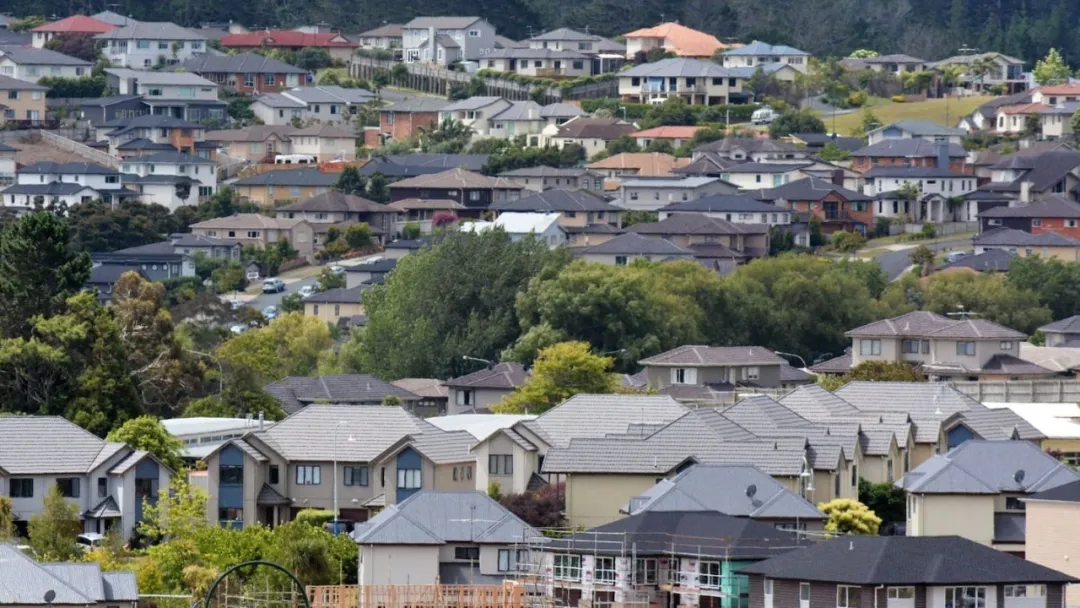
Sales are falling, homes for sale remain plentiful and prices are easing, yet first-home buyers are increasing their share of purchases. Ahead of the election, New Zealand’s housing market is sending signals in different directions.
On 28 October, the Reserve Bank of New Zealand defied widespread market expectations by holding the Official Cash Rate (OCR) at 2.75%, giving borrowers a temporary reprieve from a rate rise.
But can a single pause change the housing market’s direction?
In its market overview on 27 October, The Post noted that housing and its costs remained among voters’ leading concerns. Meanwhile, some economists are beginning to suggest that a new normal may be emerging in New Zealand’s housing market, with future price growth potentially falling short of the pace seen over past decades.
Assessing this shift requires a clear understanding of several key aspects of the current market.
Sales slow as buyers and sellers become more cautious
According to Real Estate Institute of New Zealand (REINZ) data cited by The Post, nationwide residential sales totalled 5,752 in September, down 11.6% year on year. After seasonal adjustment, sales fell 4.3% compared with August. Of the country’s 16 regions, 11 recorded fewer sales than a year earlier.
Using a different measure that includes both private and agency sales, Cotality recorded annual sales of 87,920 homes, more than 4,000 below the recent peak reached in December last year.
The figures are not directly comparable, but both point to weakening sales momentum.
Cotality head of research Nick Goodall said the initial forecast of 100,000 sales this year had now been revised down to fewer than 90,000. He expects sales volumes may remain subdued over the next few years, with actual outcomes still dependent on the economic recovery and global uncertainty.
This means the wait for housing market activity to recover may be longer than previously expected.
More homes for sale does not necessarily mean owners are rushing to sell
Data from realestate.co.nz shows nationwide housing stock for sale stood at 34,001 homes in September, up 10.7% year on year, while new listings rose just 0.8% over the same period.
Goodall noted that elevated stock levels mainly reflected slower sales leaving more homes on the market, rather than an unusual surge in new listings.
This distinction matters. High stock levels can result from large numbers of sellers entering the market, or from existing listings taking longer to sell. These reflect different market conditions.
For buyers, greater choice means more room to compare, negotiate and wait. Sellers, meanwhile, face competition from similar properties and the holding costs associated with longer selling periods.
However, elevated stock levels alone do not prove that all sellers are in a hurry to sell, nor do they imply that every property offers substantial room for negotiation.
Prices are still easing, but regional differences are marked
REINZ data shows the national median residential sale price was NZ$755,000 in September, down 2.3% year on year.
According to an NZ Herald report from the same period, QV put the national average residential property value at NZ$892,580, down 0.9% year on year and 1.9% since the start of the year.
The median sale price and average residential property value are different measures, so the difference between their dollar amounts cannot be interpreted as a price rise or fall. Both, however, indicate that the national housing market remains weak.
This decline also differs from the sharp falls in the early stages of the market correction from 2022 to 2023. Goodall described current prices as continuing to drift down slowly.
Beneath the national figures, regional differences remain pronounced. Auckland and Wellington are weaker, while parts of the South Island are still recording growth. The national decline in house prices therefore cannot simply be applied to every city, neighbourhood or property type.
What does a rising first-home buyer share mean?
Cotality’s buyer classification data shows first-home buyers’ share of purchases exceeded 30% for the first time in September.
Goodall believes a quieter market, less competition and greater choice have given first-home buyers more breathing room to negotiate. They remain motivated to buy, but are also more mindful of economic risks and avoiding overpaying.
However, a rising market share does not necessarily mean more purchases. If investors and existing homeowners moving home make fewer transactions, first-home buyers’ share can rise even without a substantial increase in their purchase numbers.
These figures are therefore better used to examine the mix of market participants than to declare a broad recovery in first-home buyer demand.
For investors, whether rental income can cover financing, insurance, council rates and maintenance remains a practical constraint. Households moving home must consider the sale price of their existing home, the cost of their next home and the timing of both transactions, often making their decisions more complex.
Building consents are rising — how far away is a construction recovery?
Weak house prices and sales do not mean every indicator of residential construction is falling.
According to Stats NZ data cited by The Post, 41,268 new homes were consented nationwide in the year to the end of August, up 21% year on year.
Westpac senior economist Satish Ranchod believes the growth is concentrated mainly in Auckland and Canterbury, but planned building activity is also increasing across several other regions, potentially supporting residential construction over the coming year.
However, building consent is just one stage in a project’s progress. It does not mean construction has begun, financing has been secured or sales have been achieved.
Interest rates, construction costs, presales and developers’ funding arrangements will still affect whether projects proceed. For builders and materials suppliers, rising consents point to potential business opportunities, but cannot be treated as confirmed orders.
Can an unexpected pause in rate rises change the housing market’s direction?
The decision to hold the OCR unchanged on 28 October gave the market some breathing room.
Writing for OneRoof, independent economic commentator Tony Alexander noted that the New Zealand dollar fell and wholesale interest rates temporarily eased after the announcement. However, he remained concerned about inflation risks and believed a rate rise was possible in December.
This is his personal analysis, however, rather than a policy course already confirmed by the Reserve Bank of New Zealand.
For borrowers, a pause in the OCR does not guarantee an immediate fall in fixed mortgage rates. Banks’ advertised rates are also influenced by funding costs, competition and expectations for future interest rates.
For the housing market, even improved mortgage offers need to flow through to household budgets, confidence and buying decisions before they can generate more sales.
A single rate pause can therefore change short-term expectations, but cannot by itself establish that the housing market has turned.
A new normal of low growth: forecast or reality?
In his analysis in October, Cotality chief property economist Kelvin Davidson noted that national residential property values remained around 19% below their peak in 2021 to 2022, but were still approximately 37% higher than a decade earlier, equivalent to average annual growth of about 3.2%.
His central point was that the gap from the peak alone cannot determine how every homeowner’s property has performed during their ownership. Experiences can differ considerably depending on when a property was purchased.
Davidson believes that if future house price growth becomes more closely tied to household incomes, long-term growth could shift from its historical range of around 6% to 7% towards something closer to 3% to 5%.
In a separate market commentary, Goodall forecast average annual national house price growth of around 3% over the next decade. These are different formulations and should not be combined into a single forecast.
Factors supporting the low-growth outlook include increased housing supply, borrowing constraints and the difficulty of repeating the boost provided by a prolonged decline in interest rates. Davidson also cautioned that this does not mean periods of stronger growth will never return.
A ‘new normal of low growth’ therefore merits discussion, but should still be treated as an assessment that requires ongoing testing.
YIJU’s perspective
If expectations for house price growth decline, homebuying and development decisions will need to rely more on actual income, demand and cash flow.
For owner-occupiers, greater choice presents an opportunity, but they should also assess job security, repayment pressure and how long they expect to hold the property. Long-term affordability matters more than buying at the exact bottom of the market.
For investors, a scenario of lower capital growth makes rental returns, ongoing expenses and debt structure more influential in determining outcomes during ownership.
Developers need to assess selling prices, sales rates and financing terms carefully, avoiding excessive reliance on future house price rises to make projects viable. Growth in building consents warrants attention, but actual sales and cash receipts are what determine whether project funding can keep flowing.
The election result may change some policy expectations, but a post-election rebound in transactions cannot be assumed in advance. Employment, incomes, mortgage offers and whether sales gradually absorb available stock will still need to be monitored.
YIJU believes the central issue in the current housing market is the rebalancing of purchasing power, supply and financing conditions. Whether ‘low growth’ ultimately becomes the long-term norm remains to be tested. Whether buying a home, investing or developing a project, everyone should consider in advance: if house prices rise only modestly and properties take longer to sell, will their finances hold up?