
Property sales plunge, prices hold steady and demand offers hope! A short-term fluctuation or the start of a longer-term trend?
What changes have the COVID-19 pandemic and a month of lockdown brought to New Zealand's property market? Are these merely short-term fluctuations, or the beginning of medium- to long-term trends? Barfoot & Thompson and Colliers have recently released their latest analysis reports, describing current conditions in the property market and related economic sectors and forecasting their possible direction.

Residential market
Sales volumes fall, new listings decline, stability holds
{ad}
According to Barfoot & Thompson's latest statistics, sales volumes in Auckland's residential market were heavily affected during the Alert Level 4 lockdown compared with March, but underlying stability remained unchanged. The details are as follows:
- Sales volumes fell 50%.
Barfoot & Thompson sold 552 residential properties last month, compared with 1096 in March, a decline of 50%. This was the company's lowest April sales figure since the global financial crisis in 2008, when it recorded 453 sales.
- New listings continued to decline.
Lockdown's clearest impact on the property market was to intensify the sharp fall in new listings. Only 239 properties were newly listed in April, less than a quarter of the number expected at this time of year. This was down 86% from March and 80% from April last year.
At the end of April, Barfoot & Thompson had 3849 properties listed, down just 3% from March. This was above the average for the preceding 3 months, but 17.8% below the same period last year. On the positive side, fewer new listings also signal market stability, suggesting more people are cautiously waiting rather than planning to exit the market.
- Lower-priced properties were more popular.
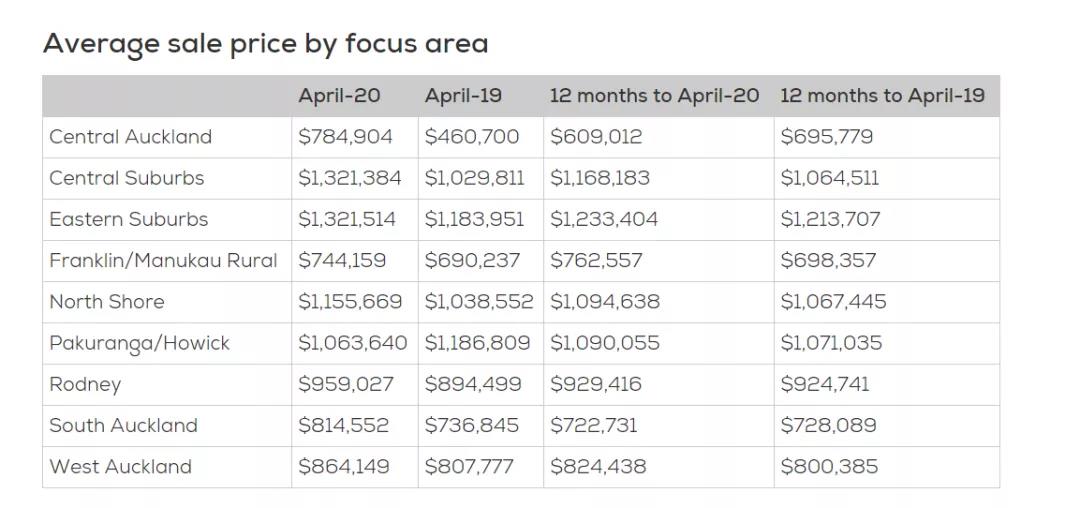
Another feature of April sales was that properties selling for less than NZ$500,000 accounted for 40% of the total. Properties selling for NZ$1,000,000 or more accounted for only a quarter, down from the usual third.
The market for large landholdings, including farms, was also severely affected, with April sales volumes reaching only a quarter of the level expected at this time of year.
- House sale prices eased only slightly.
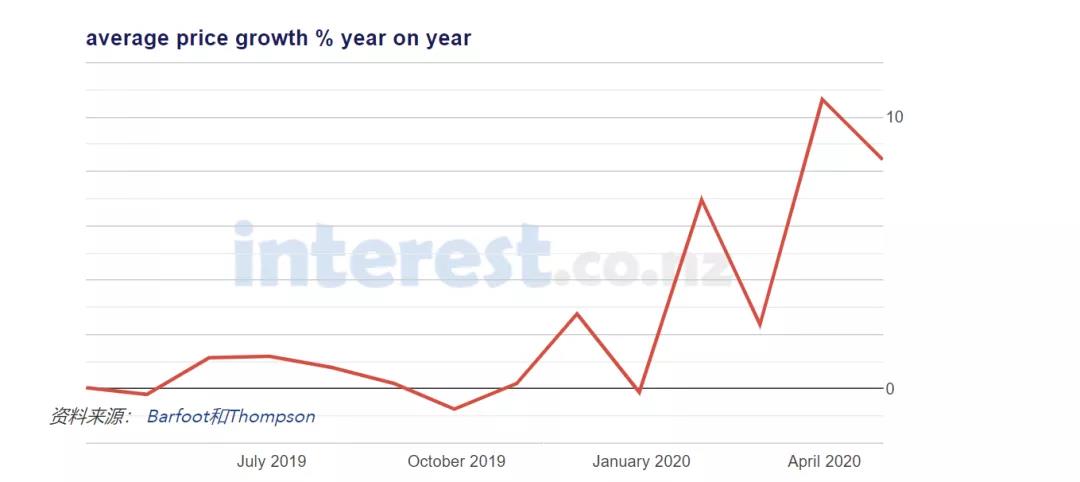
Although the changing mix of properties sold helped pull down average and median sale prices, house prices in April broadly maintained their upward momentum.
The average sale price in April fell to NZ$962,136 from the record NZ$993,528 in March, but remained well above the averages for the first two months of this year and was 3.6% higher than a year earlier. The median sale price fell 2.7% from the record NZ$925,000 in March, but at NZ$900,000 it was still Barfoot & Thompson's second-highest median on record. This also explains why, despite the sharp fall in sales volumes, the total value of sales was only 17% below the same period last year.
Barfoot & Thompson managing director Peter Thompson says the figures were better than expected. However, he also notes that the stages involved in property transactions create a lag in market data. Although some transactions in the report were completed during the Alert Level 4 lockdown, many had been agreed in March and were merely completed in April. A full picture of lockdown's actual impact on the residential market may therefore only become clear in early June, when May sales results are reviewed. Encouragingly, new listings, private viewings and sales volumes all showed positive activity in the final days of April, following the move to Alert Level Three.
Office market
Ample supply, a changing client base and demand yet to be tested
- Vacancy rates remained at record lows.
It is not yet clear how rising unemployment forecasts will affect office occupancy and take-up, but vacancy rates in many office markets nationwide remain at record lows, helping support their future market potential.
- A strong supply pipeline.
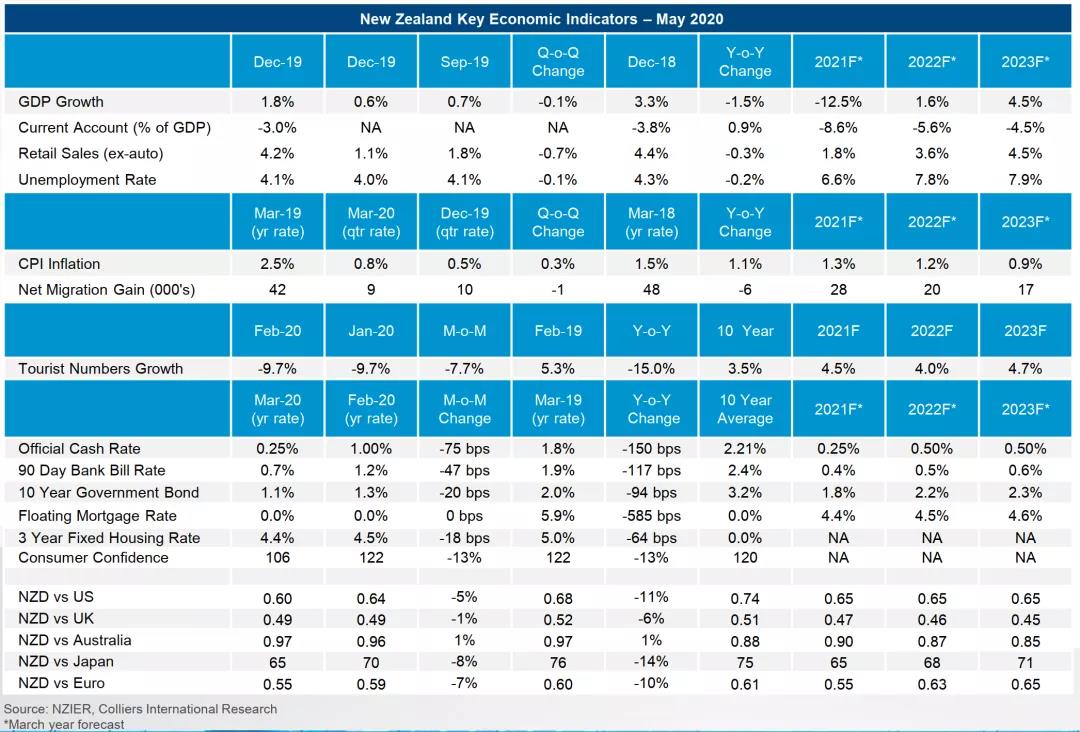
Following an earlier period of subdued market supply, supply is expected to recover over the medium term to restore the balance between supply and demand.
- Changes in the client base are emerging.
Government, IT and health sectors are clear beneficiaries of recent changes. Insurance, legal and accounting services also have some capacity to adapt. Tourism, retail, hospitality and related industries face the greatest challenges.
- The impact of working from home remains to be established.
Debate about the future of the office market and demand remains a key concern, centred on the experience of working from home and its implications for the future. Collier has conducted an international survey of 4000 participants across 23 countries and will shortly extend it to New Zealand for comparison.
Industrial market
Resilience to the crisis, strong demand and promising activity
- Under current economic conditions, the industrial market is considered more resilient than other sectors.
- Growth in logistics has already increased demand for warehouse space, providing an important driver of market confidence.
- Very low vacancy rates, limited land development opportunities and a constrained supply pipeline also provide important, positive foundations for this market.
- Industries serving rural communities and agribusinesses are currently benefiting, increasing demand in this sector.
- The impact of the construction industry varies by project.
Public works and infrastructure construction delivered through shovel-ready projects will undoubtedly stimulate activity in the industrial market. Private projects will depend on individual circumstances, with approval speed and funding capacity the decisive factors.
Retail market
Reshaping business models, adjusting leases and limiting short-term expansion
- The retail sector is currently in deep difficulty as the pandemic and lockdown restrict access to shops and services.
- Although restrictions on people's movement and traffic directly affect spending, substantial differences remain between retailers in the same sector who pay rent and those who do not.
- Under Alert Level 3, spending activity will increase through contactless payments, online shopping and collection. However, retailers may need more support beyond customers backing local businesses.
- Retailers need to establish online operations. The pandemic has accelerated some retailers' plans to move into omnichannel retailing, but the eventual balance between online services and physical shops remains unclear.
- Many shops and shopping centres have adapted and restructured to operate under Alert Level 3. This has also produced new retail concepts and approaches, primarily in food and alcoholic and other beverages, as well as future retail formats based on the shopping experience.
- There are signs that consumers' attitudes to spending may change in the short term. Their focus may shift towards necessities and value, with less discretionary and creative spending.
- Some retail tenants are negotiating rent adjustments with landlords through flexible lease terms that either party can terminate, to improve cash flow and reduce risk.
- Over the next 6 to 12 months, many chain brands are unlikely to expand their existing retail networks significantly. Instead, they will focus on assessing the pandemic's commercial impact on their existing stores.
Investment market
Liquidity and cost remain key, with sales volumes expected to rise
- Banks remain primarily focused on continuing to fund existing customers rather than new ones. Properties with A++ leases are the most sought-after.
- Investors with retail, accommodation and tourism tenants are maintaining regular contact with banks, explaining the issues they face, strengthening communication and seeking solutions as needed.
- The availability and cost of capital remain key concerns for investors. Interestingly, if liquidity and risk margins above base rates widen, borrowing costs could still rise despite the reduction in the official cash rate (OCR).
- On the sales side, contracts with restrictive conditions are being put forward, but there has not been enough unconditional sales activity over the past fortnight to establish new price and yield benchmarks.
- Buyers seeking quality property assets and looking to enter the market at this time are emerging, potentially increasing demand for certain property types.
- A range of marketing campaigns can be expected once Alert Level Two begins, including sale-and-leaseback and off-market campaigns. These could bring higher sales volumes in the second and third quarters and provide better price guidance.