
Post-COVID-19: housing market opportunities in these places are too good to miss
Whether through short-term fluctuations or long-term trends, COVID-19 has undeniably had a major impact on New Zealand's housing market. After the slowdown caused by lockdown, a surge in searches on major property websites over the past fortnight shows that buyers remain keen to enter the market. So what changes will emerge in New Zealand's housing market after the pandemic? Where will future opportunities lie? Here are 5 predictions from property experts.
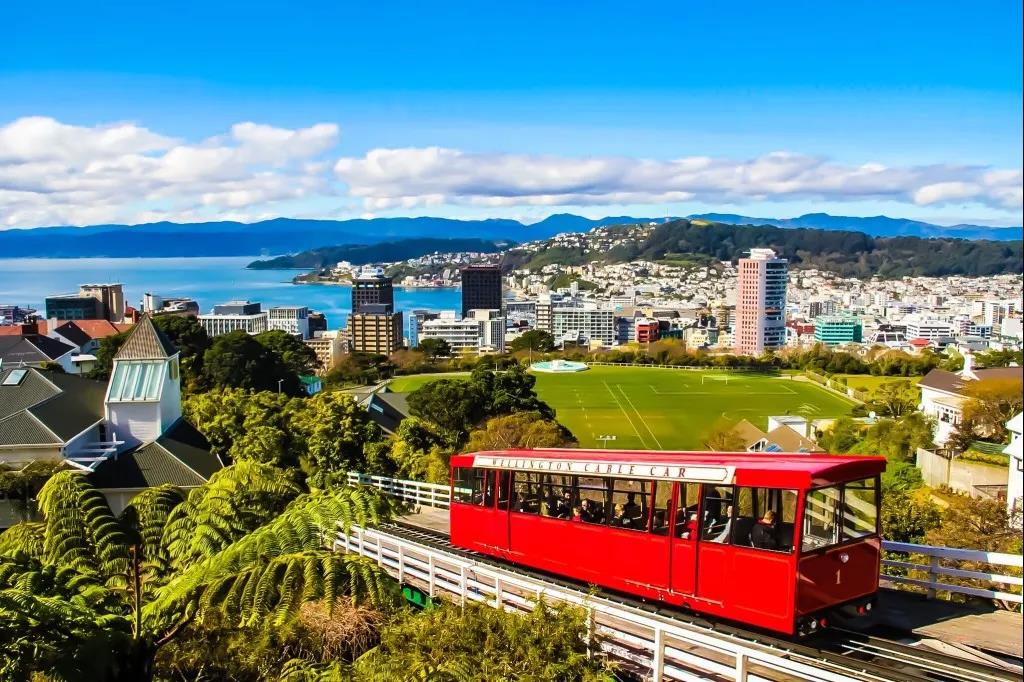
Wellington will be the strongest-performing city
Based on unemployment forecasts arising from COVID-19, New Zealanders unable to find work locally may move from smaller regional towns to major cities in search of jobs. Employment opportunities will be the biggest determinant of housing market prices over the coming months.
{ad}
Gareth Kiernan, chief forecaster at economic analysis firm Infometrics, says Wellington has the most government-sector jobs, giving it an employment advantage over other major cities. “The public sector concentrated in Wellington provides a large number of jobs. Unlike private businesses, the Government is unlikely to cut staff.”
James Wilson, director of valuations at OneRoof's data partner Valocity, believes Wellington continued to record strong value growth throughout lockdown. A local shortage of listings has both encouraged property transactions and protected the capital's property market. “Wellington has had very low housing stock since the global financial crisis, which has helped property values there remain relatively buoyant.”
Kiernan also says Dunedin, and possibly Palmerston North, will have strong property market potential because of their substantial education sectors. “We will see growing demand for training, retraining for employment and university education expand the labour markets in these two cities.”
Another major opportunity for Dunedin's development is the rebuild of Dunedin Hospital. The NZ$1,400,000,000 project was already having a positive impact on the local property market before the outbreak and is unlikely to slow in the post-COVID-19 period following this crisis. “Demand for housing for construction workers is expected to be substantial over roughly the next seven years. Local government attaches great importance to the project and is using it to stimulate economic development. I don't think they would want it delayed,” Kieran says.
Diversity will save Auckland
Although Auckland does not have as many public-sector jobs as Wellington, New Zealand's largest city continues to offer more employment opportunities.
Auckland's housing market will inevitably face challenges after the pandemic. However, because the city does not rely entirely on tourism or other high-risk industries vulnerable to shocks, major price fluctuations are not expected.
Wilson believes Auckland is not a single housing market. Beyond its central area, it has a large and diverse suburban market, with each area responding to the pandemic's effects in different ways and to different degrees. “There are plenty of employment opportunities in the central business district, South Auckland and Manukau. Those markets will perform well.”
Agriculture fares better than tourism
Agriculture and forestry are two major industries that economists expect to remain unaffected by the pandemic and economic downturn. Parts of Hawke's Bay, Waikato and Canterbury have substantial agriculture and forestry sectors, making large-scale housing market declines unlikely in these areas.
“Areas with strong resources in dairy, beef and lamb will retain stable housing markets because of international demand for these products, particularly from China. But I still expect that these areas could see falling prices and softer markets, as they have in previous years,” Kiernan says. Canterbury may, however, differ somewhat from other agricultural centres. He adds: “The region is still experiencing the after-effects of the major earthquakes, and the closer you get to Christchurch, the greater the oversupply of housing.”
Tourism faces a very different situation from agriculture and forestry. Housing prices in Queenstown and Wānaka once soared on the back of a tourism boom, but the pandemic has brought the region to a standstill. The ban on foreign arrivals and a month-long Alert Level 4 lockdown have plunged Queenstown's economy into uncertainty.
By comparison, Rotorua and Taupō may not be hit as hard as Queenstown. “Rotorua has a more geographically extensive urban centre than Queenstown, with more surrounding suburban centres relying on it for services and support. That clearly helps drive its economy. Taupō, meanwhile, has always relied more heavily on domestic tourism,” Kiernan says.
Popular investment markets are at risk
Housing markets in places such as Whanganui, Gisborne and Timaru, which attracted many out-of-town investors seeking inexpensive property, will see a marked slowdown and falling prices in the near term.
Kiernan expects demand for investment property to weaken because of uncertainty over the economic outlook. He believes out-of-town investors may wait 18 to 24 months before re-entering the market. “More and more people expect property prices to fall. As an investor, you make money through capital gains, so naturally you don't want to expose yourself to the risk of falling prices.”
Wilson believes investors will shift their attention to areas where rental housing and employment opportunities offer higher long-term returns, typically some of New Zealand's main cities.
Quality suburban neighbourhoods deserve attention
Kiernan believes people who can afford to buy in quality neighbourhoods are generally less sensitive to economic crises. “If you're a New Zealander working overseas, New Zealand currently looks like a more desirable place to live. So I can understand demand for housing in quality neighbourhoods remaining high over roughly the next six months, even if that is not necessarily permanent.”
He cites Auckland suburbs in the double Grammar zone, such as Remuera, Epsom and Mt Eden, where property values will be more resilient during the crisis. “These neighbourhoods' markets are not entirely immune, but they may be sheltered for longer when the wider market declines.”