
Four regions become buyer's markets, see where opportunities to buy are emerging
With the future impact of COVID-19 on New Zealand's economy still uncertain, property market activity and price movements seem to have become a barometer, with every forecast and data release stirring emotions. Confusingly, or perhaps reassuringly, three months have passed since lockdown, and the latest property market reports remain relatively positive so far.
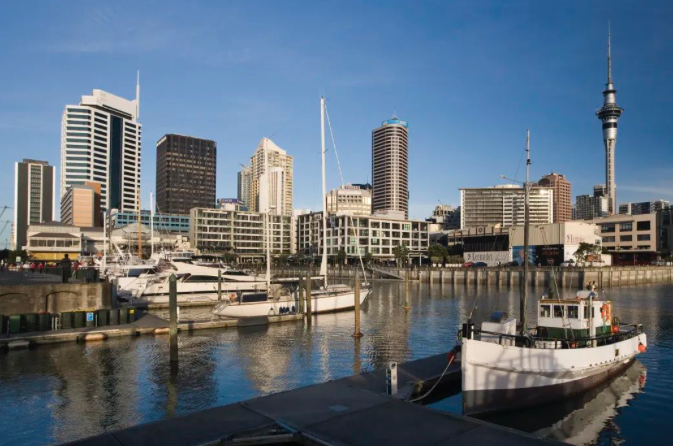
The latest data from realestate.co.nz show that in 2020, month 6, average asking prices nationwide remained stable, and 4 regions, including Auckland, became buyer's markets.
New listings also increased in most other regions.
{ad}
This indicates that New Zealand's property market remains active following the outbreak, which is good news for prospective home buyers.
Realestate.co.nz spokesperson Vanessa Taylor said almost every region saw substantial numbers of new listings last month. New Zealanders did not appear to be shying away from selling property, which she saw as a good sign.
“Generally, in times of economic uncertainty, people tend to hold off selling property while they wait to see what happens.”
Vanessa said: “The increase in new listings and the stability of prices currently suggest that New Zealanders in most regions are still selling their homes, without intending to make substantial price cuts.”
No sign of a market slowdown A substantial influx of new listings
Although new listings inevitably fell during lockdown, they rebounded markedly nationwide in June, rising 19.7% compared with the same month last year.
Compared with June 2019, Southland, Auckland and the West Coast recorded the largest increases in new listings, at 59.0%, 38.9% and 32.4% respectively.
Nationwide, only four regions—Gisborne, Wairarapa, Marlborough and Canterbury—recorded fewer new listings.
However, the data show that these declines were relatively small.
“In Gisborne, there were just two fewer new listings last month than in June 2019. In Wairarapa, there were only five fewer than in the same month last year.”
“Overall, the increase in new listings nationwide shows that the market is not slowing down.
Sellers have been busy preparing their properties for listing, racing to get their homes onto the market.”
Prices remain stable Three regions reach new highs
Despite the substantial increase in listings, in month 6 property prices remained stable, without the declines some had predicted.
The national average asking price was NZ$727,749, a slight increase of 0.5% from May 2020 and 10.4% higher than in June 2019.
In contrast to the national trend of stable prices with modest increases, the Coromandel (Coromandel), Southland and Hawke's Bay () regions recorded their highest-ever asking prices.
The Coromandel's average asking price exceeded NZ$800,000 for the first time, reaching NZ$847,950, up 14.3% on the same month last year. This was well above the region's previous record of NZ$786,037, set in April 2019.
In Southland, the average asking price rose 18.4% year on year to NZ$415,094, exceeding NZ$400,000 for the first time since records began in 2007.
Hawke's Bay also recorded a new high, with an average asking price of NZ$609,243. This was slightly above last month's record of NZ$606,136, and up 12.3% on June 2019.
“It is reassuring that, despite the considerable difficulties many New Zealanders face in 2020, the anticipated property price declines across multiple regions did not materialise in June.”
Vanessa said: “Of the country's 19 regions, 17 recorded higher asking prices than last year, which will be a significant encouragement to sellers.”
A good time to buy Four regions become buyer's markets
Property inventory data from realestate.co.nz show that Auckland, Nelson and Bays (Nelson & Bays), Canterbury () and Central Otago/Lakes (Central Otago/Lakes) became buyer's markets in month 6 of the year.
Vanessa explained that property inventory is measured by the time it would take to sell all existing stock at the current sales rate, assuming no new properties were listed.
“Inventory data reflect sales conditions. When inventory exceeds the long-term average over the past 13 years, it indicates that supply exceeds demand and the market has become a buyer's market.”
Using Auckland as an example, Vanessa explained that, in theory, if no new properties were listed in Auckland, it would take 37 weeks to sell all existing listings on realestate.co.nz.
This is much longer than the 13-year average of 23 weeks, confirming that Auckland has become a buyer's market.
Auckland last entered a buyer's market in July 2019.
The other three regions have entered buyer's markets for the first time in many years.
Nelson and Bays last did so in October 2014, Canterbury in July 2011, and Central Otago/Lakes in January 2012.
Vanessa said it is called a ‘buyer's market’ because slower sales are generally good news for buyers. They may mean a temporary end to the frantic competitive bidding that has been common in these regions in recent years. “
For prospective buyers, this could be a good time to purchase in these regions.”
Focus on Hawke's Bay
Average asking prices in Hawke's Bay have risen steadily over the past two years, from NZ$516,524 in June 2018 to NZ$609,243 in June 2020, an increase of nearly NZ$100,000. The average asking price has also exceeded NZ$600,000 for the third consecutive month.
Vanessa said: “Inventory in the region is low, at just 17 weeks, compared with its 13-year average of 28 weeks. This indicates a strong seller's market.”
However, Vanessa also said that, with new listings in June up 19.4% on June 2019, and total listings up 11.8% year on year, it remains to be seen whether prices in the region will remain stable or fall back below NZ$600,000.
“If COVID-19 has taught us anything, it is that the future is difficult to predict.
Although we can make some predictions by looking at the recovery of property markets in the United States and the United Kingdom, these remain speculation and need to be supported by actual data.”
User data from realestate.co.nz show that Havelock North, Taradale and Napier Hill are the region's most popular areas.
Most prospective buyers searching for properties for sale in the region live in Hawke's Bay, with substantial numbers also coming from Auckland and Wellington.