
The forecasts really were wrong! Auckland's housing sales and rental markets both perform positively in June
As yesterday's article on this account showed, the national housing sales market has so far shown no signs of weakening or plunging prices. Today, let us look at Auckland, New Zealand's main housing sales and rental market, where conditions have likewise exceeded expectations and delivered positive outcomes for both buyers and sellers.

Sales market defies forecasts of decline
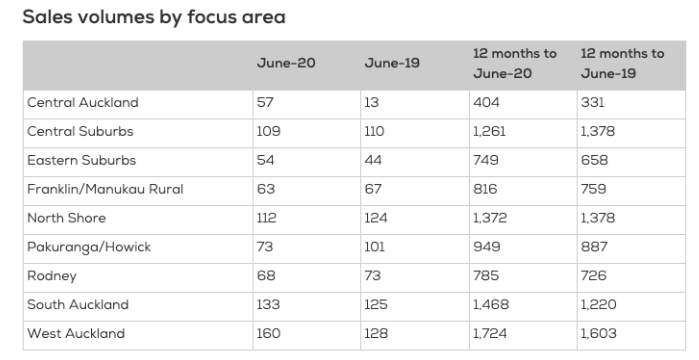
The latest report from real estate company Barfoot & Thompson shows that Auckland's housing sales in June did not match some economists' earlier forecasts. Recent sales have returned to normal transaction levels, while prices have remained stable, presenting a positive picture.
{ad}
- Sales volumes and prices remain stable
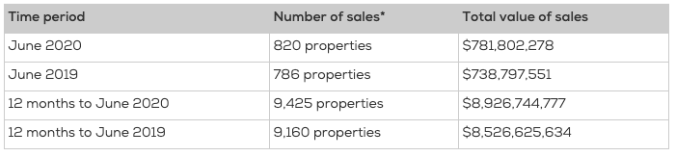
Barfoot & Thompson managing director Peter Thompson described June as “a very steady month of trading, with no signs of market fragility”.
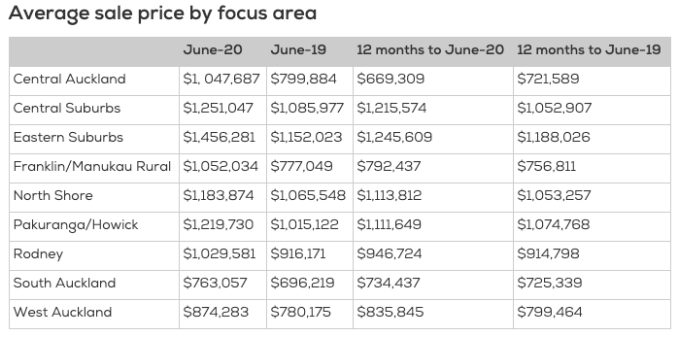
The company reportedly sold 820 homes in June, up 4.3% on the same month last year and in line with sales levels in the corresponding month of earlier years. The average price was NZ$953,417, NZ$5,000 higher than in May and up 1.4% on June 2019. The median price was NZ$910,000, NZ$4,000 lower than in May but up 7.7% on June last year.
“Looking at June alone, trading was no different from normal times,” Peter Thompson said. He attributed this to three main factors:
- a steady flow of new listings, totalling 1582, up 3% on the same month last year;
- large numbers of first-home buyers entering the market;
- catch-up business following slow sales in May.
Peter Thompson believed the June figures showed that buyers were not as convinced as economists that house prices would plunge, nor were they waiting on the sidelines. Instead, they were confident about properties bought at current prices over the next 3 to 5 years. However, he again stressed that it was “too early to use a single month's figures as an indicator that the property market has defied expert forecasts and shaken off the negative effects of COVID-19”.
- Strong supply and demand for homes above a million dollars
The report showed strong demand for homes priced above NZ$1,000,000, with 366 sales in June, accounting for 44.6% of all transactions. Sales in this price bracket last reached such a high proportion more than two years earlier, in May 2018. There were also 46 sales above NZ$2,000,000 in June, representing 5.6% of all transactions.
At the end of June, Barfoot & Thompson had 4,001 homes on its books. Peter Thompson said this would give prospective buyers the widest possible choice over the next 12 months to find a property that suited them best. Earlier, realestate.co.nz spokesperson Vanessa Taylor had also said Auckland had entered a buyer's market and that this could be a good time for prospective buyers to purchase. Their views were in agreement.
- Rural property sales rebound
Rural and lifestyle property sales also rebounded in June, particularly in Pukekohe, Tuakau, Pukekawa and Te Kauwhata in southern Auckland. Prices in this sector remain stable, and sellers are satisfied with current sale prices. However, as rising sales further reduce the number of properties available, rural and lifestyle properties will continue to face low-stock pressures in the short term.
The rental market sees a shift in returns
Barfoot & Thompson calculates rental yields by comparing the average annual rental income from three-bedroom homes in Auckland with the average sale price of three-bedroom homes sold through the company over the previous six months. Spokesperson Kiri Barfoot said that, as of April and May this year, typical rental properties in Auckland were yielding 3.27%. Yields had previously peaked at 3.47% in November 2019, but continued house price growth had since brought the figure down slightly.
Meanwhile, many banks' fixed mortgage rates have fallen to record lows below 3%. “This means there is a degree of balance, or even a shift, between borrowing costs and the potential returns from rental properties.”
- Mortgage rates will remain low for a considerable period;
- new listings are increasing;
- new rental properties are exempt from the rent freeze.
Kiri Barfoot believed these factors could be sending a strong signal to investors and could partly explain the stability of the sales market in June.
A look back at the data:
- South Auckland offers the best rental yields
Looking back at rental yields across Auckland in recent years, the south, west and North Shore have performed relatively well. Across nearly 60 areas outside the city centre, overall yields were above 3.00%. Of these, 12 had yields above 4.00%, with most of those 12 areas in South Auckland.
- Rental yields versus mortgage rates
Looking back at yield and mortgage rate data since March 2015, average rental yields at the end of 2016 were just 2.85%, while average mortgage rates were approximately 5.60% floating and 5.10% fixed for two years. In March 2015, rental yields were as high as 3.54%, while average mortgage rates were approximately 6.60% floating and 6.00% fixed for two years.