
Commercial property in the pandemic: inevitable short-term setbacks, a relatively optimistic long-term outlook
COVID-19, a tiny virus visible only through a microscope, has upended politics, economies, production and everyday life across the world in just half a year. Even New Zealand, far away in the South Pacific, has not escaped unscathed. In the months since the outbreak, its economy has experienced a rollercoaster of ups and downs. The commercial property market, a microcosm of New Zealand's economy, has likewise suffered a major blow, facing an unprecedented crisis and an uncertain future.

Leading commercial property services company Colliers International has continued tracking data across New Zealand's commercial property sectors, while also comparing them with markets across the Asia-Pacific region affected by the pandemic.
Drawing on a series of its reports, including the May, June and July editions of the New Zealand Research Report for 2020, and Asia Pacific Real Estate: Still Good Value In A Changed World, this article aims to provide an overview of New Zealand's commercial property market during the pandemic, offering readers insight into its future direction and investment prospects.
Office buildings: temporary rental losses, but vacancy rates remain manageable
Rental income temporarily affected
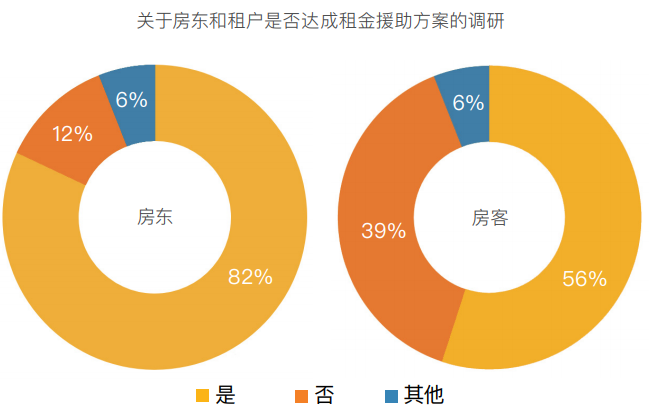
Rent relief was a major focus during New Zealand's full lockdown. Colliers International's June commercial property research report found that 82% of landlords and 55% of tenants surveyed confirmed they had reached some form of rent assistance agreement with the other party.
In an earlier survey of leasing arrangements in April, 84% of tenants said they had paid more than 50% of their rent. A survey a month later produced similar results: around 67% of landlords and 76% of tenants estimated that rent actually paid in May was the same as in April.
Although New Zealand's move to Alert Level 1 gave more businesses the opportunity to resume operations, improve cash flow and return to paying their full contractual rent as soon as possible, some landlords still faced vacancy pressures and had to offer greater incentives to attract tenants.
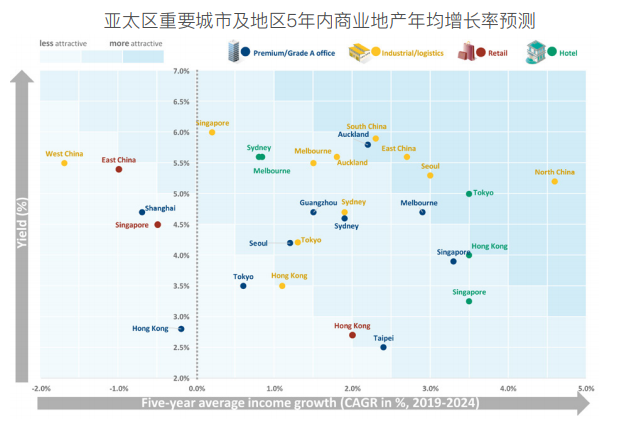
A research report on rental growth prospects across the Asia-Pacific office market therefore forecast that effective office rents in Auckland could fall over the coming year.
Yet the same report was optimistic about the medium- to long-term outlook for Auckland's office buildings.
It noted that, following a possible short-term decline, Auckland had one of the most promising rental growth outlooks in the Asia-Pacific region over the next five years.
Singapore was expected to lead, with average annual growth of 3.3%. Melbourne was forecast to be Australia's strongest market, with average growth of 2.9%, followed closely by Auckland at 2.2%.
Market demand remains strong
Colliers International's June survey report found that around 80% of respondents agreed office building prices would fall in the short term from their peak in the second half of 2019. Although some remained sceptical about this outlook, enthusiasm among prospective buyers had clearly increased.
Around half of respondents believed the currently uncertain economic situation could gradually stabilise within a year.
Many prospective buyers believed 2021 would bring new opportunities, while 58% of respondents said they hoped to make a purchase within the year.
Transaction data available so far showed that, with limited price changes, quality commercial properties with long leases to anchor tenants remained in strong demand.
One reason demand currently exceeded supply was that some vendors had chosen to postpone selling until the second half of 2021.
The impact of working from home has yet to emerge
Four weeks of lockdown brought major changes to working practices. Many companies discovered that remote working, initially adopted out of necessity, offered benefits such as substantially reducing rent and utility costs and easing pressure on public transport. A survey on working from home also found the arrangement popular with employees, with many respondents hoping it would become part of normal working life.
This cast a shadow over office investment prospects, which the market had consistently viewed favourably.
However, despite ongoing debate, no evidence had yet emerged of an inevitable link between employees working from home temporarily and companies' demand for office space.
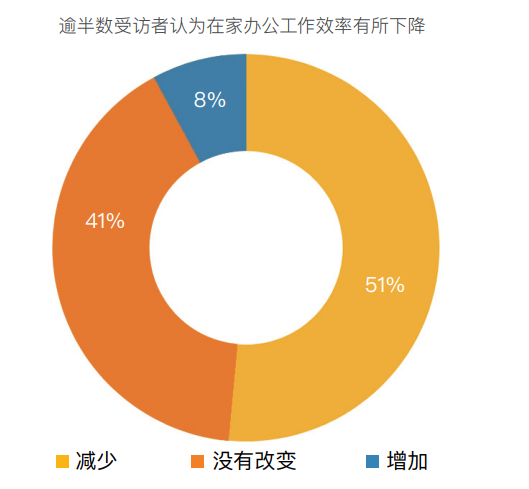
In fact, although most respondents said they wanted more flexible remote working arrangements, more than half in the same survey acknowledged that working from home affected productivity: around 49% reported unchanged or even improved productivity, with 8% reporting an improvement, while 51% said productivity had fallen.
Moreover, remote working does not necessarily mean less office space. Even companies adopting hot-desking and adjusting how they use their floor space still need sufficient room.
Traditional offices will continue to offer many advantages that remote working cannot match. Direct collaboration with colleagues (34%), meeting and socialising with colleagues (13%), and being able to hold meetings at any time (12%) were all cited as benefits of office working.
Another important view was that working in an office helps maintain a clearer separation and better balance between work and home life (19%).
It is therefore unsurprising that 75% of survey respondents said they would retain their existing leased area or take more space over the next 12 months.
Vacancy rates are rising but remain manageable
The Auckland and Wellington office markets have long been characterised by low vacancy rates and steadily rising rents.
By the end of 2019, Auckland CBD's vacancy rate had fallen to a record low of 4.7%%, while rents had grown by 3.9%% annually over the preceding 5 years.
This was because, despite increasing development of new offices, supply still could not keep pace with growing demand. The economic impact of COVID-19 would undoubtedly lift vacancy rates from their previous lows, but there were no signs yet of a severe shock to this market.
In Auckland, particularly in the premium office market, tenants mainly come from sectors that remained stable or grew during the pandemic, such as IT companies, government departments and healthcare organisations. Other tenants include relatively stable sectors such as accounting firms, law firms and financial institutions. These organisations occupy around 50% of office space in the central business district (CBD).
Similarly, Wellington's office market has been strongly supported by a high proportion of government tenants and has not been noticeably affected.
Several major local developments also continued to progress, including projects on Whitmore Street and the second stage of Bowen Campus. Lease commitments from companies including BNZ, EY and Fujitsu further strengthened confidence in Wellington's office market.
{ad}
Industrial property: a resilient market, active trading and strong demand
With COVID-19 affecting almost every part of the economy to some degree, industrial property was almost the only property sector viewed favourably by industry experts and investors.
Both its sustained upward momentum before the outbreak and its recent active trading demonstrated that industrial property was more resilient and robust than other markets amid the broader economic downturn.
A closer look at the industries within this sector reveals the following:
- Statistics New Zealand data showed that in 2019, goods-producing industries such as manufacturing and construction, which form the core of the industrial sector, accounted for around a fifth of New Zealand's NZ$300,000,000,000 GDP. Substantial government investment in shovel-ready projects was expected to deepen the market and boost activity further. Private-sector projects would depend on individual circumstances, with approval speed and access to funding the decisive factors.
- Service industries such as transport, logistics, warehousing and postal services were already growing before the COVID-19 outbreak. In recent months they had grown strongly as people turned to online and click-and-collect services, becoming an important driver of market confidence.
- Agriculture and forestry were among the few New Zealand industries unaffected by the pandemic. Businesses serving rural communities and agribusinesses, such as the dairy industry, were therefore also benefiting from strong demand.
Extremely low vacancy rates, limited opportunities for land development and constrained supply pipelines all underpinned the industrial property market's continued positive performance during the downturn.
Nationwide industrial property sales data showed little significant change in prices and yields for major assets compared with before the COVID-19 outbreak. Active trading was driven by a range of buyers, including syndicates, high-net-worth individuals and owner-occupiers.
Construction market: projects yet to start and planned developments may be shelved
If any uncertainty remained in a sector whose current position and prospects were both widely viewed favourably, it inevitably involved the leading industry within industrial property: construction.
In Auckland, for example, years of demand outstripping supply in the CBD and metropolitan office markets had stimulated a relatively active construction and development market.
Although around 28,000 square metres of new space had been completed over the preceding 12 months, metropolitan vacancy rates were still falling.
Five major projects were under construction in Auckland's CBD, with more than 87,000 square metres of new office space expected to be completed by the end of 2021.
In the metropolitan area, 35,000 square metres of new buildings were due for completion within the same timeframe. These projects nearing completion had high pre-leasing levels, so there was no reason to expect their construction to be disrupted.
When assessing the market's future prospects, the main potential changes therefore concerned projects that had been approved but had not yet entered construction, and those still at the planning and feasibility stages.
Colliers International's report considered the economy's undeniable move into recession, unemployment expected to rise to between 8% and 10%, and speculation about the possible market impact of changing working habits. Against this backdrop, projects comprising around 75,250 square metres in the CBD and 73,300 square metres in the metropolitan area might be unable to proceed without sufficient pre-leasing.
Although it was too early to predict which projects would be shelved, any development approaching construction should be securing committed tenants and increasing pre-leasing as soon as possible.
Of course, viewed another way, delays to new projects would clearly help contain, as far as possible, the rise in office vacancy rates caused by the completion of projects already under construction and the impact of COVID-19.
Retail: severely affected by the pandemic, with a sharp short-term rebound
As noted earlier, retail and hospitality were both severely affected by the pandemic, with the vast majority of operators facing cash inflows insufficient to cover their outgoings.
Although restrictions on people's movement and transport directly affected spending, substantial differences remained between retailers in the same industry who paid rent and those who did not.
Some retail tenants sought to improve cash flow and reduce risk by negotiating more flexible rent payment arrangements with landlords, or agreeing that either party could terminate the lease.
Alongside applying for government wage subsidies and negotiating rent with landlords, retailers unwilling to sit back and await their fate began seeking more proactive responses.
- The pandemic accelerated some retailers' plans to enter online retailing, although the eventual balance between online services and physical stores remained unclear.
- Many retail stores and shopping centres adjusted and restructured their operations. This also generated new retail concepts and approaches, mainly in food and beverages, as well as in the future of retail centred on the shopping experience.
- Over the next 6 to 12 months, many chain brands were unlikely to expand their existing retail networks substantially, instead focusing on assessing the pandemic's commercial impact on their existing stores.
Colliers International's market report noted signs that consumer attitudes could change in the short term. Spending might focus more on essentials and value-for-money products, with less discretionary and imaginative consumption. This suggested a full retail recovery still had a long way to go. Yet even in this uncertain sector, there was some positive news.
- By market segment, retailers classified as essential services, mainly supermarkets and pharmacies, had further consolidated their reputation as property investments offering an effective defence against market risks. They could attract greater investor interest in the current turbulent conditions. Companies with well-established online operations had also escaped some of the downturn's direct impact.
- Looking at market prospects, electronic card transaction data released by Statistics New Zealand clearly illustrated the change in New Zealanders' overall spending in April: it fell 44% compared with April 2019, while hospitality spending fell by nearly 95%. However, this sharp decline was largely forced and did not last long.
Retail spending recovered strongly as New Zealanders returned to shops after lockdown and embarked on 'revenge spending'. In May, total core retail spending was NZ$4,600,000,000, up 73% from April. Although this was 5% below the NZ$4,700,000,000 recorded in the same period a year earlier, it remained well above the 10-year average of NZ$3,900,000,000 and the 20-year average of NZ$3,600,000,000.
Although a clearer and more accurate assessment of changing market sentiment and the economic impact of COVID-19 might still be several months away, this V-shaped rebound could nonetheless be seen as an encouraging indicator of consumer attitudes.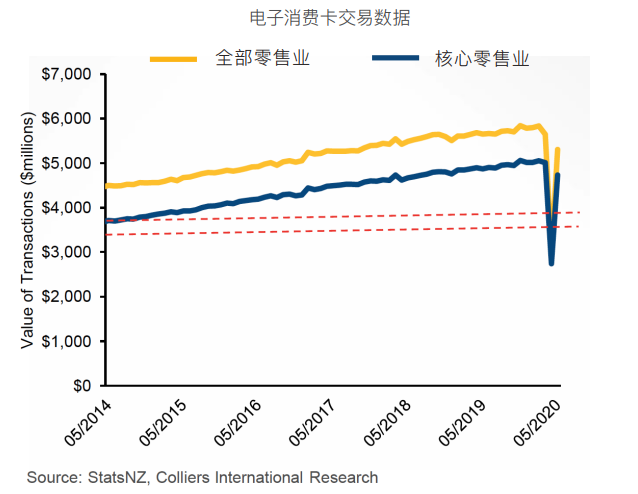
Overall, while it remained too early to assess accurately the scale and scope of COVID-19's impact on New Zealand commercial property, the sector retained a degree of stability and the prospect of a relatively swift return to growth, whether compared with other countries and territories globally or across the Asia-Pacific region, or with harder-hit industries within New Zealand.Yet the most important lesson 2020 has taught us is that the only constant in this world is unpredictable change. All we can do is make every effort and support one another, seeking the greatest possible opportunities to survive and grow through this crisis.