
Election postponed and new support announced — New Zealand can save its economy without disregarding lives!
Economists estimate that Level 3 restrictions will reduce Auckland's economic activity by around 20%. Today, Prime Minister Jacinda Arden also announced that New Zealand's general election would be postponed until 17 October. With Auckland set to remain under Level Three lockdown for at least another 10 days, the Government and experts have offered their views on how to address the potential economic impact of a second wave.
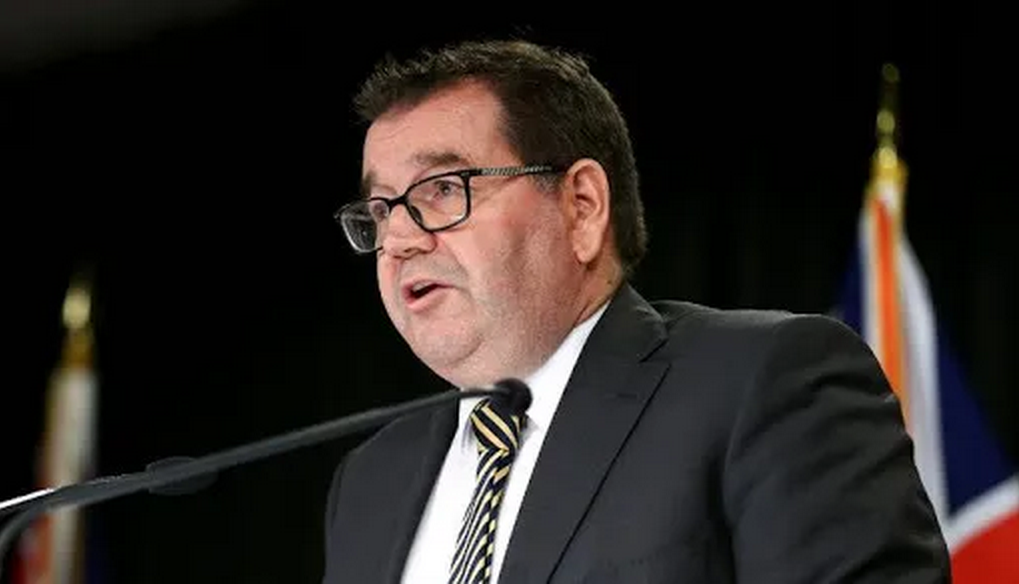
New economic support package announced urgently
At 3h this afternoon, Finance Minister Grant Robertson announced the Government's latest economic support package, covering three main areas:
- A new wage subsidy scheme, alongside an extension of the existing scheme, to support 930,000 jobs;
- A simplified leave support scheme to encourage people to get tested;
- An extension of the mortgage deferral scheme until 31 March 2021.
The new wage subsidy scheme is expected to cost around NZ$510,000,000 and cover 470,000 jobs. Businesses must demonstrate a 40% fall in revenue due to COVID-19 to qualify for the new round of wage subsidies.
Robertson said the subsidies would help employers pay two weeks of wages, but could be extended 'if needed'. Previous rounds of wage subsidies covered up to 20 weeks of wages, and the new subsidy will be funded from the balance remaining from the previous round.
{ad}
Eligible businesses nationwide can apply for the subsidy, rather than only Auckland businesses affected by the return to Alert Level 3 restrictions.
Robertson said: 'The Government has once again acted swiftly to ease the burden on businesses and workers.' He believed the new wage subsidy would help support business cash flow and confidence. 'Together with the existing wage subsidy extension, which remains open to eligible businesses until 1 September, Treasury estimates that the two schemes will cover around 930,000 jobs.'
- Leave support
To further support large-scale virus testing, Treasury has removed provisions in the existing COVID-19 Leave Support Scheme relating to employees potentially losing income and being 'adversely affected' by getting tested. This means that if employees are told by health officials or their doctor to self-isolate, their employers will still receive the equivalent wage subsidy to cover their wages while they cannot work.
Robertson stressed: 'Our priority is to do everything we can to support proactive public health measures. That also means removing barriers that discourage people from getting tested, such as fears that a positive result could cost them their job, or that being unable to work while on sick leave could leave them without income security.'
- Mortgage deferrals
The mortgage deferral scheme, originally due to end on 27 September, has been extended until 31 March 2021. The Reserve Bank and retail banks will provide further details.
- More measures on the way
Robertson also confirmed that the Government was actively preparing to ensure a timely and flexible response to possible changes in alert levels. Future plans also include possible further changes to the Small Business Cashflow Loan Scheme and the Leave Support Scheme.
'Alongside these measures to cushion the economic shock, we will continue rolling out a comprehensive recovery and rebuilding programme across New Zealand by increasing vocational training, expanding infrastructure investment to create more jobs, and supporting businesses through tax relief,' Robertson said.
Economist says lockdown is the best option
There is some disagreement, both within government and among the public, about whether Auckland should remain under Level Three lockdown. With effects reaching from national politics to everyday life, and the Government having to commit substantial additional funding to protect the economy, keep businesses alive and preserve jobs, is it worth it? After extensive data analysis, independent economist Shamubeel Eaqub has answered that question with a yes.
Eaqub said that, at least based on analysis of the available data, actively eliminating the outbreak was an effective strategy for saving the economy. Its success would depend on compliance with restrictions, the resilience of businesses and the public, and ensuring restrictions were not lifted too soon.
- Comparing economic costs
Sweden has taken a more voluntary approach to restrictions on public activity in its response to COVID-19. Eaqub compared the two countries' responses to examine lockdown's substantial economic costs and its effectiveness.
In the three months to June, hours worked by New Zealanders fell 9% compared with the same period a year earlier, similar to Sweden. Since then, however, mobility and economic activity in Sweden have remained subdued, while many New Zealand indicators had returned to normal levels before new lockdown restrictions were imposed last week.
Eaqub compared New Zealand's direct economic losses from lockdown with estimates of the economic impact had it adopted Sweden's approach. He noted that although New Zealand's lost economic output in April was estimated at nearly NZ$1,000,000,000, its economy rebounded more strongly over the following months. In the 4 months to July, New Zealand's actual economic activity was NZ$6,200,000,000 higher than the output estimated under restrictions similar to Sweden's.
Eaqub acknowledged that Sweden's data needed to be analysed cautiously, because not all of its economic weakness could be attributed to its public health measures. It was undoubtedly also affected, for example, by weaker demand for Swedish exports from neighbouring countries. However, comparisons with other countries and indicators also appear to support the advantages of New Zealand's preferred approach of eliminating community transmission: New Zealand's weekly employment rate has consistently been 6% higher than Australia's, while retail spending has remained above that in the United States.
- Quantifying the loss of life
In a global pandemic, calculations of economic losses should extend beyond economic activity: lives lost also represent an enormous economic cost. Countries that adopted looser measures or entered lockdown later have suffered large numbers of deaths. For example, deaths per million people stand at 688 in the United Kingdom, 571 in Sweden, 502 in the United States and nearly 14 in Australia, compared with 4.5 in New Zealand.
Eaqub explained that two research methods could assign a monetary cost to these figures for a more useful quantitative analysis. One assigns a statistical value to each life lost; the other calculates a statistical value based on the deceased person's expected remaining lifespan.
Using the life-expectancy method, the cost is NZ$2,000,000,000 for the United Kingdom, NZ$1,700,000,000 for Sweden and NZ$1,400,000,000 for the United States.
Using the value-of-life method, the cost is NZ$18,900,000,000 for the United Kingdom, NZ$13,600,000,000 for Sweden and NZ$15,800,000,000 for the United States.
- A smaller second-wave impact
Although the second wave has dealt a heavy psychological blow to the public, Eaqub believes Auckland's second lockdown will have a smaller actual economic impact. This is based on two considerations:
- Compared with the first lockdown, businesses and the public now have some experience of managing and overcoming the challenges posed by restrictions;
- The rest of the country is at Level 2, where restrictions have a limited economic impact.
Eaqub therefore believes that although lockdown will constrain considerable economic activity and many businesses will need government support to weather another crisis, New Zealand's previous experience shows it can achieve a relatively better economic outcome without disregarding lives.