House prices keep climbing: time for the generation born in the 90s to buy!
House prices seem increasingly out of reach, but rather than keep waiting, it may be time to act. An expert explains why those born in the 90s should consider buying their first home now.

The pandemic has not affected New Zealand house prices as expected. Instead, prices have climbed steadily in recent months, repeatedly reaching new highs. Is this really a good time to enter the market?
Reasons to buy now
- House prices continue to rise
Predictions made six months ago that the pandemic would bring a property downturn have now been disproved. Westpac's September economic bulletin offers a new forecast: house prices will rise a further 8% next year. In the short term, the trend appears to be “no price is the highest—only higher”.
- Mortgage rates hit record lows
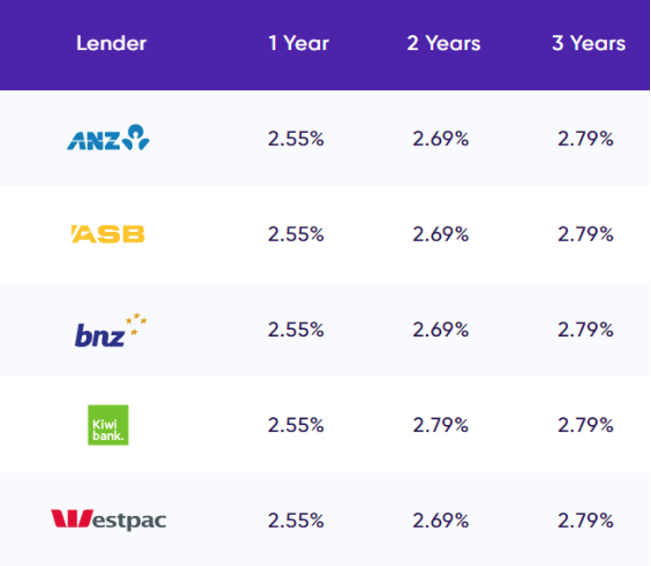
The lowest interest rate currently offered by New Zealand's four major banks is 2.55%, another record low. For comparison, their rate in October 2019 was 3.55%. Some experts expect interest rates worldwide to continue falling because of the pandemic.
- The Reserve Bank may introduce negative interest rates
In its August Monetary Policy Statement, the Reserve Bank of New Zealand included negative interest rates among its policy options and further clarified its intention to introduce them. This means mortgage rates could fall further in the short term. Westpac economists predict the Reserve Bank will cut the Official Cash Rate to -0.50% in April 2021.
- Limited returns on savings
Low interest rates also mean very limited returns on savings and some conservative investments, while property investment can help protect against money losing value.
- Rents remain high
House prices are not the only costs rising: rents are also increasing every year. With rents climbing and mortgage rates falling, buying offers better value than renting for the same outlay.
According to Statistics New Zealand, the nationwide rental price index in 2019 rose 3.5% compared with 2018.

According to the Trade Me Rental Price Index, demand for Auckland rentals increased 20% in 2020, with median weekly rent of $570, up 4% on the previous year.
Median weekly rents across Auckland in September 2020:
North Shore City ($600),
Rodney ($590)
Manukau City ($580)
Let's do the sums:
For a couple or small family renting a house with 3 bedrooms and 2 bathrooms in Auckland:
Weekly rent would be 570 NZ dollars or thereabouts.
Annual rent: 29640 NZ dollars
If we use today's 2.55% interest rate to calculate the mortgage repayments
on a home costing 800,000 NZ dollars with 3 bedrooms and 2 bathrooms:
LVR (loan-to-value ratio): 80%, meaning a loan of 640,000 NZ dollars
Loan term: 30 years
Weekly repayments: 587.5 NZ dollars (repayment type: principal+interest)
314 NZ dollars (Repayment type: interest only)
Annual repayments: 30550 NZ dollars (principal+interest)
If choosing NZ dollars
As we can see, principal-and-interest repayments are very close to the cost of rent, while interest-only repayments are much lower. And the home belongs to you, offering greater security than a rental. If you have spare rooms, you can also rent out one or two to generate income and ease the mortgage burden.
Home-buying suggestions for different incomes
Under current home-buying policies, borrowing for a first owner-occupied home can reach 90% of the property's value (an LVR of 90%). For an investment property, the maximum is 80%. This means preparing a deposit of 10%–20%%. For example, a couple could save fifty thousand or a hundred thousand dollars, perhaps with another fifty thousand or a hundred thousand from their parents, to buy a welcoming home of their own.
Here are two examples:
Example one:
Both partners work full-time on the minimum wage
Combined annual income: NZ$78,624 (minimum wage of NZ$18.9 per hour)
Maximum borrowing for a first owner-occupied home:
Calculated using the current interest rate of 2.55%:
Loan term: 30 years
Weekly repayments: 734 NZ dollars (repayment type: principal+interest)
392.5 NZ dollars (Repayment type: interest only)
Annual repayments: 38168 NZ dollars (principal+interest)
If choosing interest-only repayments, annual repayments would be: 20410 NZ dollars
Example two:
Both partners work full-time, earning NZ$35 an hour
Combined annual income: NZ$145,600
Maximum borrowing for a first owner-occupied home: 130
Calculated using the current interest rate of 2.55%:
Loan term: 30 years
Weekly repayments: 1193 NZ dollars (repayment type: principal+interest)
637.5 NZ dollars (Repayment type: interest only)
Annual repayments: 62036 NZ dollars (principal+interest)
If choosing interest-only repayments, annual repayments would be: 33150 NZ dollars
Note: These figures are for reference only. Actual borrowing must be calculated according to your household circumstances. Policy changes, KiwiSaver, income changes, whether you have children and how many, household expenses, other properties or loans, and existing debts can all affect the amount you can borrow. Consult your bank manager or mortgage adviser about your specific circumstances.
If parents are contributing financially, it is also advisable to consult a lawyer to ensure their interests are protected.
Preparing for a mortgage
If you need a mortgage to buy a home, first apply for pre-approval through a bank or mortgage broker. This will show you what you can afford and help you focus your property search.
Before applying to a bank, prepare the following:
- A completed mortgage application form detailing your income, expenses, assets and liabilities;
- Proof of income, such as payslips or tax records; if self-employed, provide financial statements for the past 2 years;
- Details of other income, such as benefits or rental income;
- Bank statements for the past 3 months;
- Loan repayment statements for the past 6 months, if applicable;
- A copy of your identification.
How can a professional mortgage adviser help during the application process?
- Save you considerable time.
A professional mortgage adviser knows each bank's latest policies and requirements and can help you find a suitable lender and mortgage structure. You do not need to approach banks individually, spend extensive time organising your documents or coordinate with multiple parties.
- Develop a more suitable mortgage plan at no cost.
Mortgage advisers generally do not charge clients service fees for standard residential mortgage applications, although commercial property and construction loans differ. They can tailor a mortgage solution to your needs and circumstances, for example by identifying potential income that could increase your borrowing capacity.
- Additional services.
An experienced mortgage adviser can also share their professional contacts and knowledge of property and finance, helping you avoid pitfalls and reduce risk.
About the expert:

York Zhang (Zhang Yong)
Chairman of Huarong Finance
In 2006, York Zhang (Zhang Yong) founded Huarong Finance to provide the Chinese community with loans for homes, construction, businesses, land development, vehicles and heavy equipment. Combining his mortgage broking expertise with his personal experience of living in New Zealand, York Zhang hopes to use Huarong Finance to introduce more products suited to the Chinese community's needs, develop more outstanding mortgage brokers and release more equity from clients' assets for reinvestment.