Industry Articles

Property · Building · Design

Major New Zealand economic data out tomorrow? The speculation on the economy and interest rates

There is no doubt that the figures on New Zealand's overall economic performance in this year's second quarter, due to be released by Stats NZ this Thursday, will be a focus for many property investors. Fears of a domestic recession have been hanging over New Zealand recently. Although some economists consider the likelihood of a recession very low, others believe it may not be far away, given the unprecedented challenges the pandemic has brought to the national economy and the continuing fall in house prices.

First-home buyers, take note! Alongside favourable market conditions, do not miss the chance to access government home-buying assistance

Some real estate agents say the first-home buyer market is recovering rapidly! Although the path to home ownership remains bumpy, banks' relaxation of lending rules under the CCCFA (Credit Contracts and Consumer Finance Act) will bring more first-home buyers into the market in a few months. A series of positive developments for first-home buyers announced in this year's Budget, including the nationwide removal of First Home Loan price caps and higher First Home Grant price caps, will provide further stimulus for a property market recovery.

An in-depth look at the 'good' and 'bad' sides of falling house prices

According to the recently released QV House Price Index, by the end of August New Zealand's average house value had fallen by around NZ$89,917, or approximately 8.5%, from its peak in January. In other words, New Zealand homeowners have been experiencing an average loss of about NZ$424 a day.

As mortgage rates break through 5, do homebuyers still dare to buy? Answer these four questions to find out!

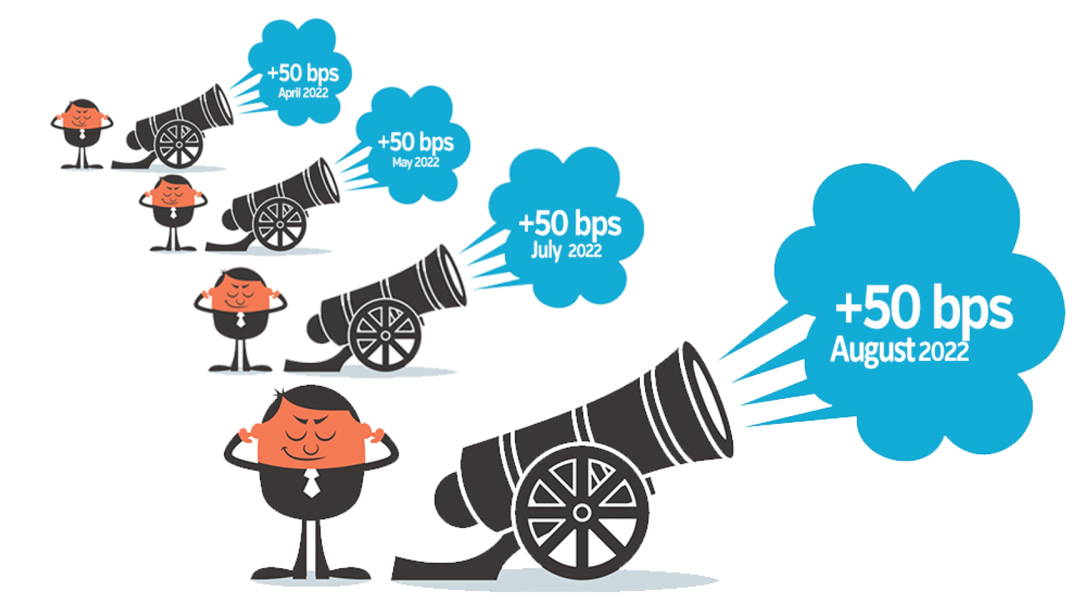
Today, ASB became the second major bank to raise its fixed mortgage rates, following Westpac last week. ASB raised its 1-year and 18-month fixed rates to 5.15% (+0.16) and 5.35% (+0.06) respectively, matching Westpac's rates for those terms. All fixed-term mortgage rates at both banks have now passed the 5% threshold, something last seen before June 2015. Observers say that although the increases at both banks are modest, they signal a gradual upward trend in mortgage rates.

Why do building consent application fees vary so widely across New Zealand? Building industry association says the system has long been failing!

Te Waihanga, the New Zealand Infrastructure Commission, recently made a surprising discovery: some councils charge reasonable building consent application fees of less than NZ$2000 per project, while others charge more than NZ$7000. For example, obtaining building consent for a property worth NZ$750,000 in the Far North is expected to cost NZ$1500, whereas consent for a property of the same value in Queenstown could cost the owner nearly NZ$8000.

Is a subdued property market good or bad for buyers? Experienced property advisers explain

Robyn Ellson, a real estate agent at Ray White Mt Eden in Auckland, says every property market has advantages and disadvantages for buyers. For example, the current market is much more stable than it was two years ago. A more stable market may be a better option for prospective buyers with clear goals and ideas about their next property. A stable market means people can be more certain about the value of their own property and comparable homes. Buyers and sellers alike need sufficiently reliable valuation data to give them confidence in their next transaction. Although the current market favours buyers and competition among sellers is fiercer, Ellson

Check your tax position now: IRD could be the biggest obstacle to your next bank mortgage

The New Zealand Herald recently reported that economic disruption caused by the Covid pandemic has led to a surge in the number of people with overdue tax. Figures released by Inland Revenue (IRD) show that the number receiving tax relief rose 4-fold in the year to June 2021, jumping from 26,048 to 112,980. Although that number has not risen significantly further this year, it remains 43% above the corresponding period in 2020. Meanwhile, the number required to pay overdue tax in instalments has almost doubled over the past year or two, from 17,460 to 33,478. These figures indicate that nearly 400,000 people in New Zealand currently have tax debt, equivalent to 10% of the workforce.