Industry Articles

Property · Building · Design

New Zealand's most expensive property sales by region in 2022 revealed! What makes these homes so costly?

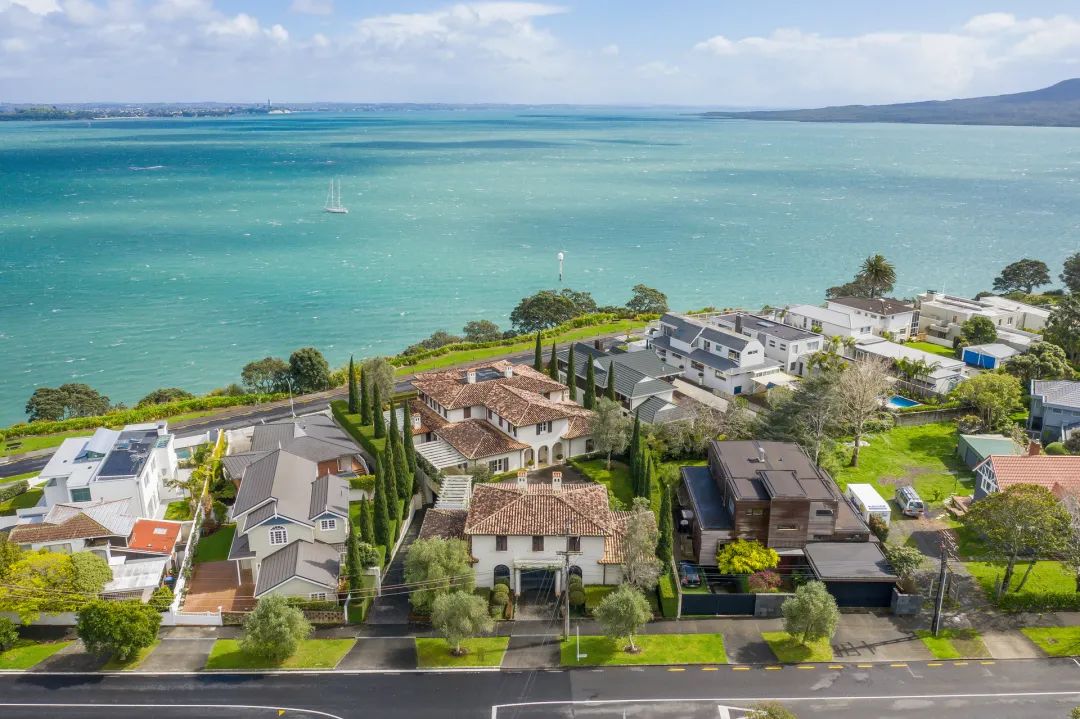
Generally, when the housing market declines, cheaper entry-level properties in less desirable locations are the first to feel the impact. But have top-end luxury homes in sought-after areas also been affected by this downturn? A recent OneRoof analysis of all settled property sales in 2021 and 2022 shows that the rapidly cooling market has also affected high-end sales. Over the first three quarters of 2022, ending in September, 99 properties sold for more than NZ$5,000,000 nationwide. Compared with the same period a year earlier, when 194 properties sold for more than NZ$5,000,000 in the first three quarters of 2021, sales volumes plunged 48%.

September house price report just released, are property markets in these areas rising or falling?

September generally marks the start of New Zealand's peak property season. In previous years, major commercial banks would take turns waging 'mortgage rate wars' around this time to capture a larger share of the lending market. This year, however, is quite different. Over the past two weeks, New Zealand's five major commercial banks have each completed another round of rate increases (see the chart below). As the official cash rate (OCR) continues rising, banks' fixed mortgage rates across the main terms are moving rapidly towards 6% per annum.

Revealed: where in New Zealand is best for first-home buyers with a budget under one million dollars?

YIJU has recently received many questions from first-home buyers wanting to know where the best investment opportunities are for those with budgets below NZ$1,000,000. Coincidentally, data recently collected and analysed jointly by OneRoof and its partner Valocity reveals which parts of New Zealand offer the best opportunities for buyers with budgets below NZ$1,000,000 to enter the property market.

Interest rates are rising rapidly,house prices keep falling,how close are we to negative equity? This article explains

This is set to be another nerve-racking week for New Zealand borrowers. After ANZ sharply increased its fixed mortgage rates on Tuesday, banks including Westpac and ASB quickly followed suit (see the chart below for details). Westpac and ASB both raised their one-year fixed mortgage rates by 30 basis points to 5.45%. ASB also raised its 18-month, 2-year and 3-year fixed rates to 5.65%, 5.75% and 5.95% respectively, matching ANZ. Notably, Westpac left its 3-year fixed rate unchanged at 5.65%, the most competitive among the five main banks. YIJU believes that, as the US Federal Reserve steps up its

Warning: high inflation and high unemployment will sharply increase mortgage default risks for New Zealand borrowers

On Tuesday, New Zealand's largest mortgage lender, ANZ, sharply increased its fixed mortgage rates. Its 6-month rate rose by 35 basis points; its 1-year, 18-month and 2-year rates each rose by 30 basis points; and its three-year rate rose by 26 basis points (see the table below for details). All ANZ's main mortgage rates are now well above those of its main competitors, making it the first mover in a new wave of rate increases.

A step-by-step guide to government home-buying assistance for first-home buyers with insufficient deposits

Data suggests enthusiasm among first-home buyers has reached unprecedented levels since the New Zealand Government introduced its home-buying assistance policies in May this year. In particular, many new migrants recently granted residence under the one-off resident visa programme have joined the house-hunting market. Mortgage advisers also report more first-home buyers seeking advice about mortgage pre-approval. This means the relaxation of government home-buying assistance policies has made more first-home buyers eligible for support. Recently, YIJU New Zealand has received many letters from readers asking: what are the eligibility criteria for First Home Partner, and how do you apply? In response, the YIJU editorial team has focused on first-home buying

When will OCR increases end? Economists issue their sternest warnings on house prices,mortgage rates and construction

Last Thursday, Stats NZ released the long-awaited second-quarter GDP figures, showing modest economic growth of 1.7% as people spent more on travel and recreation. This meant New Zealand narrowly avoided a technical recession. Although economic growth offered some welcome news for the property market, food price figures released last week brought our hopes for the economy's future back to reality. Food prices rose 8.3% in August, the largest increase since July 2009, during the worst of the global financial crisis. Second-quarter inflation, announced in July, reached a staggering 7.3%, while the steep food price increase in August does not bode well for

Be alert! Will government assistance encouraging first-home buyers really benefit them, or leave them struggling?

This year's government Budget changed the house price caps for buyers seeking a First Home Grant and removed the price caps for First Home Loans entirely. YIJU sees these incentives as the Government's attempt to give more buyers access to first-home grants and loans, addressing the affordability difficulties that high house prices have created for first-home buyers. The price caps have long faced public criticism, particularly in Auckland, where they have lagged well behind the median sale price of properties in the region.